
I bought the Onix Graphite Z5 in August 2024, four months after I closed up my electrical shop for good. It was the first paddle I owned that did not come out of a cheap wood starter set, and I picked it for one unglamorous reason: the face is wide enough that a ball I misjudge still has a chance of finding it.
Two years and a few months later, it is still the paddle I reach for. Not out of loyalty to the brand. I have picked up other paddles at the courts, played three or four games with them, and handed them back every time. What follows is what I have actually learned from playing the Onix Z5 four or five mornings a week, outdoors at a town park here in Warwick, Rhode Island from April until the cold runs us off, and indoors at a community center gym through the winter.
The Quick Verdict
A wide-faced graphite paddle with a soft, readable feel that has survived two outdoor seasons of morning open play. I would buy it again, and I would wrap an overgrip on it the first day.
Amazon Check Today's Price →Two years in, this is still the paddle in my bag
The Onix Graphite Z5. 7.84 ounces on the listing, 15.5 by 8.3 inches, 4 1/4 inch grip, Nomex honeycomb core. Mine has been through two park seasons and two gym winters and it is still the one I pull out.
Amazon Check Today's Price on Amazon →How I've Used It
My routine is boring, which is what makes it a fair test. Open play at the park four or five weekday mornings, 8:00 to about 10:30, usually six to eight games depending on how the rotation shakes out. Saturday mornings Carol and I play doubles together. She started a year after I did and she is my regular partner now, which means most of my points are played with somebody I do not want to let down.
Take one morning last September as an example. It was 61 degrees when I pulled in at ten to eight and there were already six of us waiting on the benches, which meant no sitting down between games. I played nine in a row. The paddle felt the same at game nine as it did at game one, and that is the kind of thing you cannot put on a spec sheet. A paddle that goes soft by your seventh game is telling you something about its core, and mine does not do it.
The paddle lives in a sling bag behind the seat of my truck. It has been rained on twice, left in a hot cab more times than I want to admit, and dropped on asphalt at least once that I actually saw happen. I wrap the handle with an overgrip because I sweat, and I have replaced that overgrip maybe eight or nine times. The paddle underneath is the same paddle.
I also drill with it on weekday afternoons when the courts are empty, serving and hitting drops out of a tube of balls, sixty or seventy reps at a time. That is a lot of repetitive contact on the same small area of the face. It is where a paddle either loosens up or stays honest, and mine has stayed honest.
The gym games are a different animal. Indoor balls skid and the floor is slicker than asphalt, so the ball comes off the paddle faster than my hands expect for the first week of every winter. The Z5 does not add pop to a bad swing, which I appreciate more now than I did in 2024. It tells me the truth about what I just did.

The Wide Body Is the Whole Point
The listing gives the dimensions as 15.5 inches long and 8.3 inches wide. That is a standard wide-body shape, not an elongated one, and the difference matters more than any other number on the page. A wide face puts more surface below and above the ball. When I reach for a low ball and get there late, the ball still hits paddle instead of air.
I did a kitchen table experiment the first week I owned it. I held the face flat, dropped a ball on the middle, then worked my way out toward the frame an inch at a time. Contact maybe an inch and a half in from the edge still sent the ball back at a reasonable pace. On the wood paddle I started with, anything near the edge died right there and flopped onto the floor. I am not a lab and that is not science. But one of those results keeps a rally alive and the other one does not.
At 64 with a right knee that complains on cold mornings, I am not winning points with footwork. I am winning them by staying alive in the rally until somebody else makes the mistake. A forgiving face buys me the half step I do not have anymore, and in doubles that half step is most of the game.
It costs you something, and I want to be straight about that. A shorter, wider face means less leverage on the swing. Serve power has to come from my legs, my shoulder turn and my timing, not from a long paddle whipping through the ball. I am fine with that trade. I would rather keep a rally going than win a point on a serve nobody can return.
I have never owned an elongated paddle, and I am not going to pretend I have tested one for months. A friend from open play lets me try his cheap paddle now and then. The reach is nice and the hitting area feels smaller to me, but that is a first impression from twenty minutes of games, not a review. If you are chasing reach, be honest with yourself that this is the wrong shape for you.
What the Nomex Core and Graphite Face Feel Like
The listing calls the core Nomex honeycomb, the face graphite, and the frame carbon fiber. What that means in my hand after two years is a firm, quick response on dinks and a slightly muted feel on hard drives. Soft hands at the kitchen line. Less pop than I expected when I swing too hard, which has turned out to be a feature.
The sound has not changed either. Mine gives off a flat, low pop against the core, closer to a dull tap than a crack, and it made that same noise in the fall of 2024. I have hit with paddles that rattle like a coffee can with a loose screw rolling around inside, and that is a sound you learn to distrust. When mine comes off the face clean I know I found the middle without looking up to check.
It is listed at 7.84 ounces. My kitchen scale puts it within a hair of that with an overgrip wrapped on, which is close enough that I stopped weighing it. Medium weight is the right description. It does not feel head heavy to me and it does not feel like a toy I could bend with my thumbs.
The touch is where the Onix Z5 earned its place in the bag. On a dink I can feel the ball compress and leave. That feedback is what let me figure out how much to soften my hands, because before this paddle I honestly could not tell a good dink from a lucky one.
I am not going to tell you a paddle taught me a skill. It did not. What it did was make the result of each shot easier to read, the way a good hammer makes it easier to feel whether you are driving a nail straight. That is the whole claim I am making, and it is enough.
Eight or nine overgrips later, the paddle underneath is the same paddle.
The 4 1/4 Inch Grip and the Elbow Business
The grip is 4 1/4 inches, and the listing describes the handle as a tennis-style shape. It felt familiar immediately because I played tennis badly in my twenties and my hand remembered. I have an average-sized hand and it sits right where I want it. A player with bigger hands will probably want an overgrip just to build it up, which is what I do anyway.
In my first season I had some tightness in my right elbow. I saw my own doctor about it, took a couple of weeks off, and came back with lighter grip pressure and a shorter backswing. I am not a physical therapist and I am not handing out medical advice. If your elbow is talking to you, go see somebody who knows what they are looking at.
What I will say, as one player to another, is that a medium-weight paddle I am not fighting has been easier on my arm than the heavy wood thing I started with. The Onix is light enough in the hand that I stopped squeezing it. Grip pressure was the thing I had to fix, and a lighter paddle made that fix easier to hold onto.
Two Years of Wear: What Held Up and What I Replaced
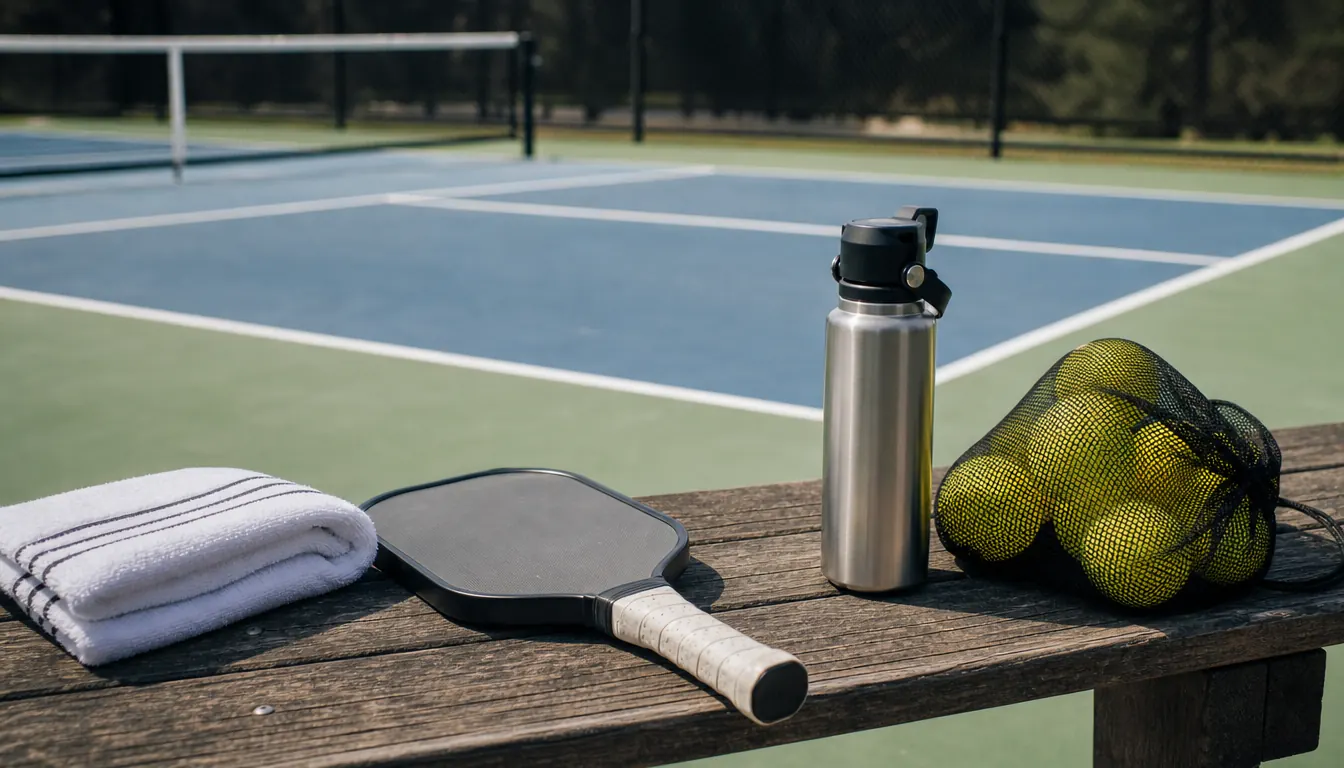
The honest answer is that I have replaced the overgrip and nothing else. There is scuffing on the face from asphalt and from a couple of balls I chased into the fence. No dead spots that I can find. No rattle when I shake it next to my ear. The handle has not loosened and the core has not gone soft on me.
The edge guard is still tight against the frame all the way around, and that was the first thing I checked after I dropped it near the net post that first spring. I have seen older paddles where that guard starts to lift and peel back at the corners, and once it lifts, grit gets underneath and stays there. Mine took a scuff on the corner and nothing else. Run a thumbnail along the seam and you feel it sitting flush.
The listing carries a one year limited warranty. Mine is well past that, which is part of why I am writing this now instead of in the fall of 2024. Two years is long enough for a paddle to show you what it is. A month is not. Most of what you read about paddles online is written four weeks in, and four weeks tells you almost nothing about how a face holds up.
One thing I would do differently: I would have wrapped an overgrip on the very first day. The factory grip is fine, but sweat is sweat, and a slick handle on a volley at the net is how you lose a point you had no business losing.
The other thing I would tell you is to keep it out of a hot truck cab if you can help it. I did not, for two summers, and the paddle came through it. I am not going to claim that is a recommendation from the manufacturer. It is just what happened to mine.
What I Liked
- A 15.5 by 8.3 inch face that forgives late contact on low balls
- Nomex core gives soft, readable feedback on dinks and drops
- 7.84 ounces feels balanced in the hand rather than head heavy
- Two outdoor seasons of morning play with only overgrip replacements
- 4 1/4 inch tennis-style grip felt natural from the first game
Where It Falls Short
- The short wide face gives less leverage, so serve power has to come from you
- Hard drives feel a little muted next to a poppier paddle
- The factory grip goes slick once you sweat through it
- The one year limited warranty is long gone by the time you really know the paddle
Who This Is For
This is a good fit for the player who wants a forgiving face and soft hands more than raw power. That describes most of the people I play with at 8:00 on a Tuesday, and it describes me. If you are new to the game and still learning where the ball is going to land, a wide face gives you more second chances while you figure it out. If you are an intermediate doubles player who lives at the kitchen line, the touch on dinks is the reason to own it.
It also suits players who do not want to think about their equipment. I have a friend who re-tapes his grip before every session and talks about paddle weights like they are carburetors. That is fine for him. I wanted one paddle I could buy, wrap, and forget about for a couple of years. That is exactly what this has been. If you want to tinker, there are paddles with more knobs to turn. If you want to play, the Onix Z5 gets out of the way.
Who Should Skip It
Skip it if reach is your main problem. The elongated paddles exist because a longer face extends your coverage, and this one is deliberately short and wide. If you are constantly beaten on balls hit past your hip, a different shape is the fix, not a better attitude.
Skip it if you want pop. There are paddles that make a drive feel like a firecracker going off, and this is not one of them. If your game is built on hitting through the ball and ending points early, the muted feel here will frustrate you. I play a soft game by necessity and by temperament, so the trade suits me. It will not suit everybody.
And skip it if a slick handle is the kind of thing that will drive you crazy, because the factory grip is nothing special. Buy an overgrip at the same time and save yourself the aggravation. That is a small complaint, but it is a real one, and I would rather tell you than have you find out on a humid morning in July.
If a wide face and soft hands are what you're after, this is the paddle I'd hand you
Two years of morning open play, two outdoor seasons, two gym winters, one replaced overgrip after another. The Onix Graphite Z5 at 7.84 ounces with a 4 1/4 inch grip, still in my bag because nothing else I picked up beat it.
Amazon Check Today's Price on Amazon →