
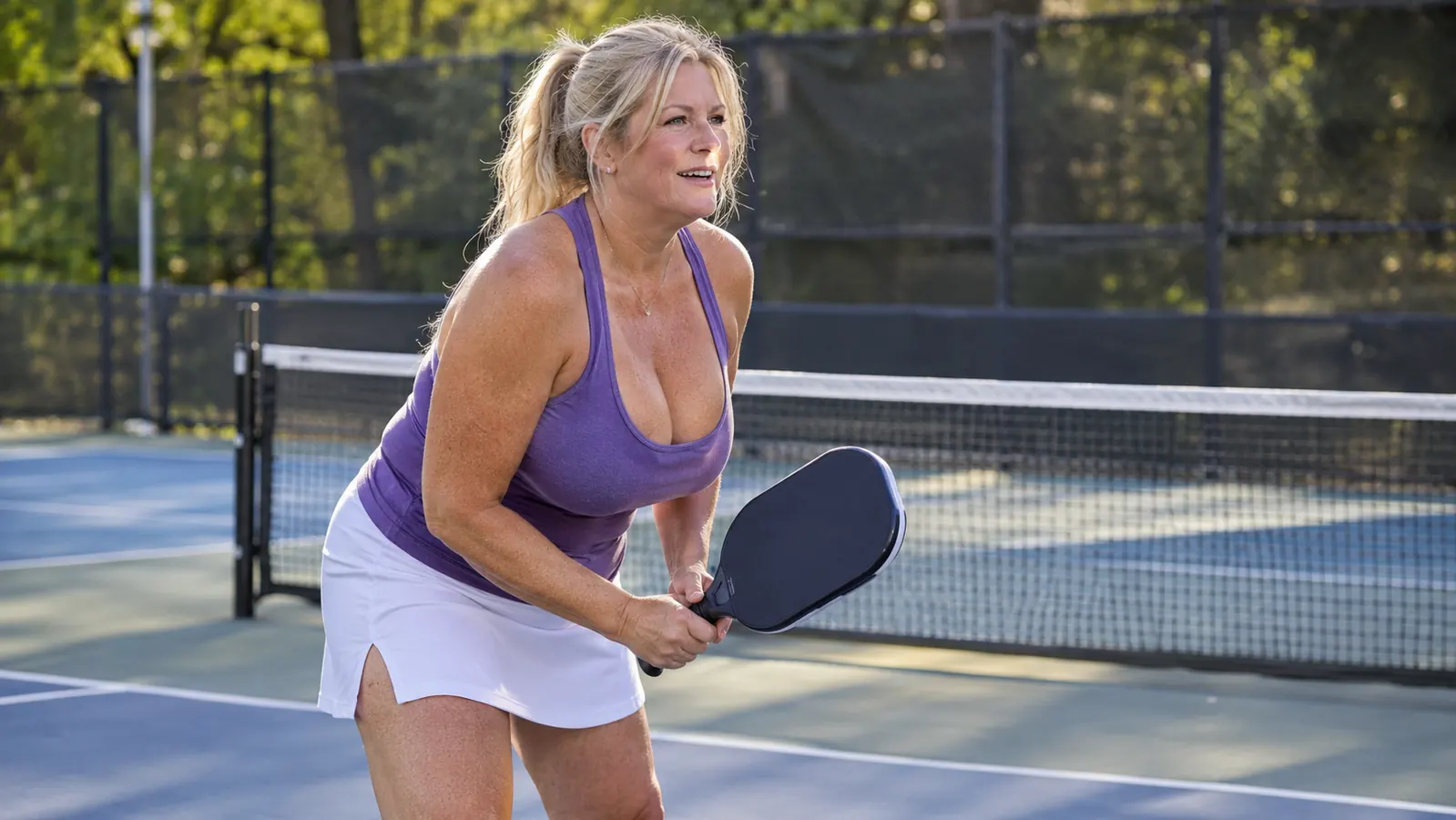
I spent my first year and a half of pickleball playing in the same running shoes I wore to the hardware store. Nobody told me otherwise, and it did not occur to me to ask. Running shoes are what a man wears when he is going to be on his feet, and I was going to be on my feet. That was the whole of my thinking. I had a decent paddle, a bag by the door, and a pair of shoes built for something else entirely.
Then a Tuesday morning in March 2026, I backed up for a lob at the town park courts, felt my heel slide about half an inch on the painted surface, and caught myself with a lunge that left my right knee sore for four days. Nothing dramatic. But I am 64, I play four or five mornings a week, and I decided I was done guessing. That week I read through what felt like forty listings before I ordered the ASICS Gel-Dedicate 9. Eight months and around 135 sessions later, here is what I actually found.
The Quick Verdict
A sensible, honest court shoe for a recreational player who wants grip and stability without paying for a tournament-grade model. It won't make you faster. It stopped me from sliding, and that was the whole job.
Amazon Check Today's Price →The shoe that replaced my running shoes on court
Lace-up, rubber court sole, moderate foam cushioning. If you are still playing pickleball in running shoes, this is the simplest correction you can make to your setup.
Amazon Check Today's Price on Amazon →How I've Used It
I bought these in March 2026 to replace the running shoes. From that week forward they have never left the court bag. I do not wear them to the grocery store, I do not wear them to mow the lawn, and I do not wear them walking the dog, because we do not have a dog. They go on in the parking lot and come off in the parking lot. Eight months in, they have somewhere around 130 to 140 sessions on them, split roughly seven to three between the outdoor courts at the town park and the community center gym where I play through the winter.
Before I spent money on a court shoe, I tried two cheaper corrections, and both of them failed for the same reason. First I put a pair of drugstore insoles into the running shoes, thinking the problem was that my feet hurt. It was not. The problem was that the sole was never meant to slide sideways, and a soft insert under the heel does nothing about a shoe that wants to keep going forward when I want to stop. Then I dug an old pair of cross trainers out of the closet and played a week in those. They were heavier and slightly better on the plant, but the tread was rounded off from two years of yard work and I could feel the whole shoe roll a little on a hard cut. Two weeks of that and I put them back. The lesson I took from the whole experiment is that you cannot fix a sole problem with something that is not a sole.
Outdoors is the town park, April through early November, on painted asphalt that gets hot and tacky by 9 in the morning. Indoors is the community center gym floor, which is a different animal entirely. Slicker, dustier, and harder on the joints if you ask my knees. I wanted to see how one shoe handled both before I wrote anything down, because a shoe that only works on one surface is half a shoe for a man who plays year round in Rhode Island.
I am a solid intermediate in open play, right handed, and I am not going to pretend these shoes did anything for my shot placement. What I can tell you is what I noticed in my feet and in my stance, which is what a shoe is responsible for and about all it is responsible for.
The Rubber Sole Was the Actual Difference
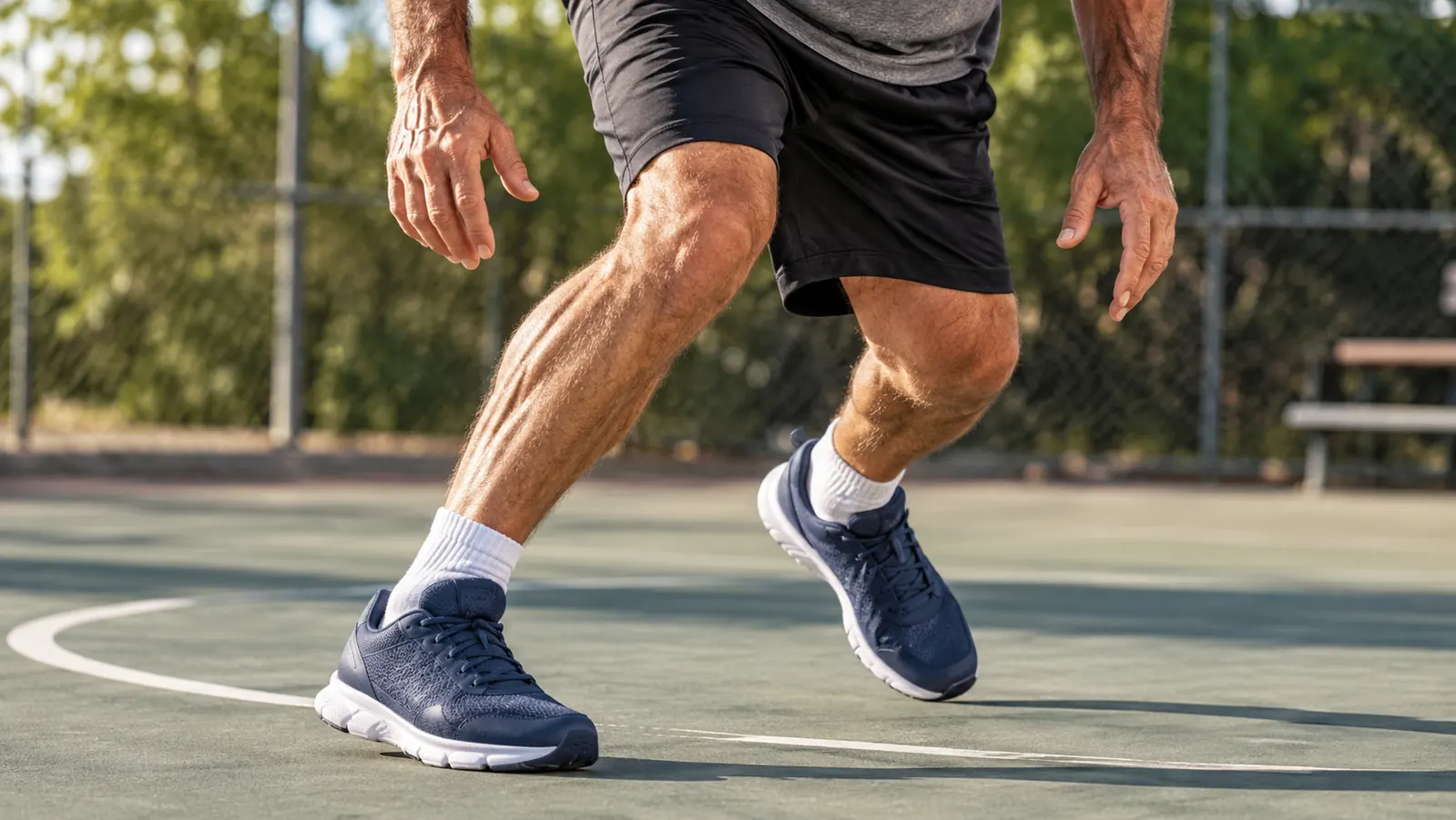
Here is what I did not understand about running shoes until I stopped wearing them. A running shoe is built to move you forward in a straight line and to soften a heel strike. A pickleball point is nothing but lateral movement and sudden stops. You shuffle left, you plant, you backpedal, you cut. The sole of a running shoe does not want to do any of that, and mine did not.
The Gel-Dedicate 9 has a rubber court sole. That is the listing's language, not mine. I could feel the difference on the very first morning, and not in a dramatic way. In a boring, useful way. When I planted to hit a backhand, my foot stayed where I put it. The half inch of slide I had learned to compensate for was simply gone, and I had not realized how much of my balance was built around managing it.
I noticed it most in the second week, during a drill where I hit backhands cross court off a feed from Carol and then recovered toward the middle. In the running shoes I had been taking a small extra step after contact to keep from sliding, a habit I did not know I had until I stopped needing it. In the ASICS I planted and pushed back without the extra step. My recovery felt quicker to me. That is not a claim about winning more points, it is a report on where my feet ended up.
The listing also calls the cushioning level moderate, with foam in the insole. That is accurate and it is also the honest limit of the shoe. It is not a plush shoe. My feet feel fine after two and a half hours, but I would not call the ride soft. If you are coming off a heavily cushioned running shoe, the first session will feel firm underfoot, and the second one will feel normal.
When I planted to hit a backhand, my foot stayed where I put it. The half inch of slide I had learned to compensate for was simply gone.
Outdoors on Asphalt vs Indoors on Gym Floor
Outdoors, this shoe has been very good to me. The rubber sole grips painted asphalt without feeling glued down. I play the 8:00 to 10:30 open session, and by the end of it my feet are tired in the ordinary way rather than the sharp, hot way they used to be. I have not had another slide like the one in March.
A July morning tells you more about a court shoe than a cool one does. The asphalt at the park gets soft and slightly tacky by the third game, and that is usually when my old running shoes got unpredictable. Through July and August I did not have a single moment where the shoe and the ground disagreed. I also noticed the closed toe stayed comfortable in the heat, which surprised me, since I had assumed it would feel like an oven by 10 in the morning.
Indoors is where I had to adjust my expectations. A gym floor is dustier and slicker than asphalt, and any rubber sole picks up dust. About three weeks into the winter season I noticed I was losing grip late in a session, looked down, and found the outsoles glazed with a fine dust from the floor. I started wiping them with a damp towel between games. Problem solved. That is not a flaw in the shoe, it is a fact of indoor courts, and it is worth knowing before you blame the shoe.
The other indoor note is the toe. I drag my trail foot on serves, and I have done it since my first season. Eight months in there is visible wear on the toe of my right shoe. Not a hole. Wear, and the stitching is still intact. I expect to get through this winter and probably one more season before it becomes a real problem.
Fit, Weight and the Boring Details
The listing puts the pair at 2.2 pounds and gives the box dimensions as 12.44 by 6.3 by 4.75 inches. I did not put them on a kitchen scale because mine is not fine enough to be useful, but they feel light enough that I forget about them, which is the only weight test that matters to me. They are lace-up, which is what I want, and the heel is listed as no heel, so do not expect a shoe that locks your heel down the way a work boot does.
Break-in was a non-event, which is a compliment. I wore them around the house for one evening, then played a full morning in them the next day and had no hot spots. The laces stayed tied through two and a half hours of open play, which sounds like nothing until you have played in a pair that did not. I lace mine a little looser over the top of the foot than I do in a walking shoe, because I want the midfoot snug and the top of my foot free.
Fit ran true for me. I take my normal size and my normal size was right. Width is where I would tell you to be careful. I have an average foot and the shoe is snug through the middle in a way I like, because a snug midfoot is what keeps my foot from shifting over the sole. Carol tried mine on once and handed them back inside of ten seconds, so if your foot runs wide, order accordingly or expect to send them back.
One more thing the listing is honest about: not water resistant. I got caught in a drizzle at the park in September, played through it because we had the court and the company, and my socks were damp within twenty minutes. That is fine for a court shoe and it is not fine if you were hoping to wear these for anything else.
What Eight Months Did Not Fix
I want to be clear about one thing, because I read plenty of shoe reviews that blur it. My knees still ache some mornings. My right elbow still gets tight when I play four days running, and I still manage that the way my own doctor and I discussed, with rest and a lighter grip. The shoes did not touch any of that, and no shoe would have.
What the shoes did was remove one specific problem, which was my foot moving when it should not have been moving. That is worth something. It is not worth claiming more than that. If you are shopping for a shoe to fix a joint, talk to your doctor instead of a retired electrician on the internet.
What I Liked
- Rubber court sole grips painted asphalt and gym floors without feeling sticky
- Moderate foam cushioning held up through roughly 130 sessions
- Lace-up closure stayed tied through two and a half hour open play
- Light enough to forget about, listed at 2.2 pounds for the pair
- Toe wear at eight months is cosmetic, the stitching is still intact
Where It Falls Short
- Firm underfoot if you are used to a heavily cushioned running shoe
- Picks up gym dust and needs a wipe down between indoor games
- Not water resistant, damp socks in a drizzle
- Snug through the midfoot, not a friendly shoe for wide feet
- No heel structure, so no locked-in feel at the back
Who This Is For
This is a shoe for a recreational player who is on court two or more times a week and who is currently playing in running shoes, cross trainers, or whatever was by the door. That was me. It is also a good fit for a player who wants a straightforward court shoe without paying for a top-tier model, and whose foot runs average to slightly narrow.
It is a genuinely good choice if you play both outdoors and indoors through the year, because the rubber sole works on both surfaces with a small amount of housekeeping. If you are the type to wipe your shoes down between games, you will be happy. If you are not, you will be the person sliding in the fourth game of the morning.
Who Should Skip It
Skip it if you have a wide foot. Skip it if you want a soft, cushioned ride, because this is not that shoe. Skip it if you are playing at a level where you are moving hard enough to want a shoe built around that, because the ASICS Gel-Dedicate 9 is a solid recreational shoe and it is not pretending to be a competition shoe.
And skip it if you want something to wear off the court. It is not water resistant, it is not built for pavement, and I would not wear it to the store. Buy it as a court shoe and it will do exactly what the listing says it will do.
Eight months in, they are still in my court bag
If your feet are still sliding in running shoes, this is the correction I wish I had made a year earlier. Sizing ran true for an average foot. Check the current price and the size chart before you order.
Amazon Check Today's Price on Amazon →