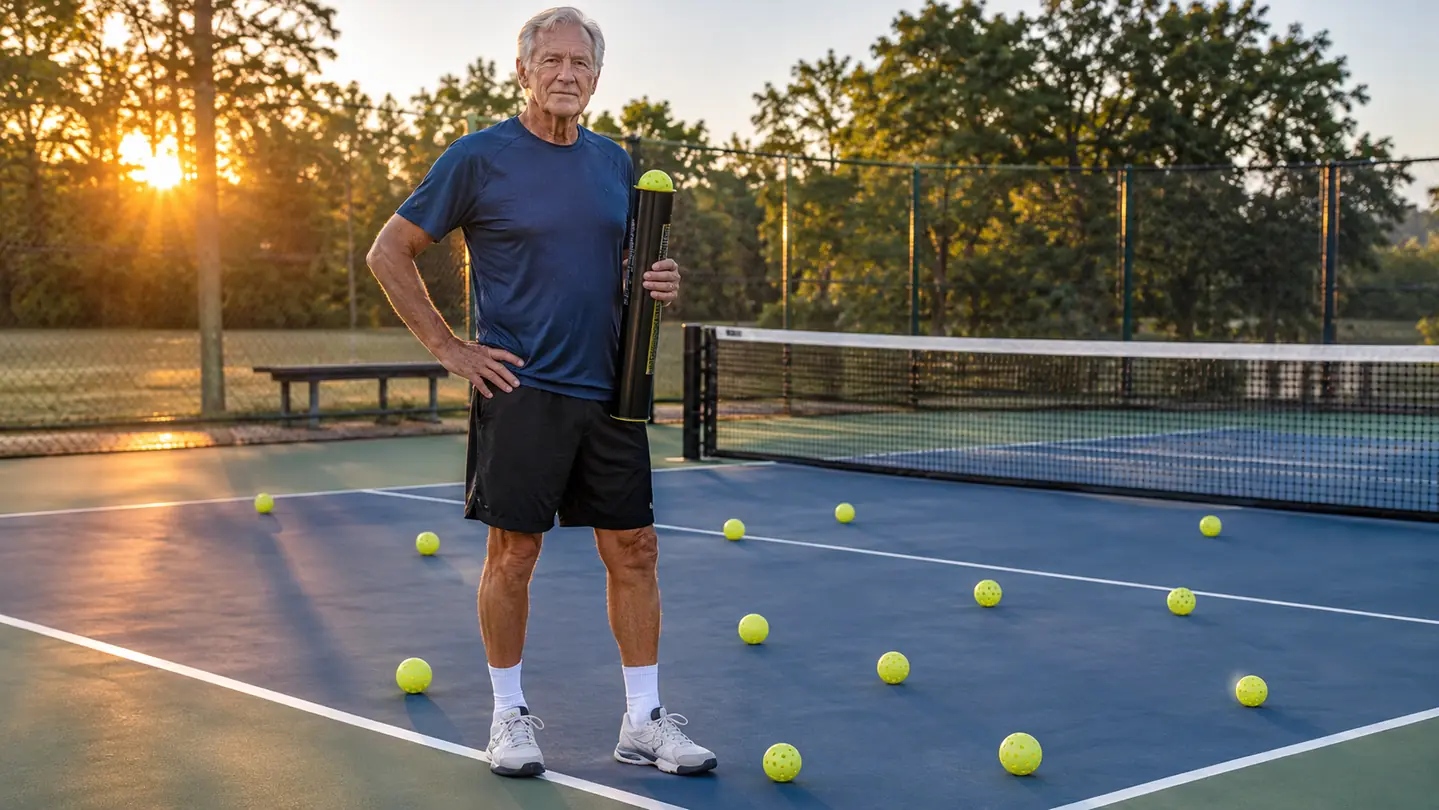
Open play ends the same way every morning at the town park. The last point gets played, everybody shakes hands, and then thirty or forty pickleballs are sitting on the court and every one of them has to go back in a bag. I used to do it the obvious way and walk the court, bending over for each ball. By the last dozen my lower back had opinions and my knees had joined in. I am 64 and I am not a physical therapist, so I will not tell you what your back can handle. I will tell you what I did about mine.
In July 2026 I bought a Tourna pickup tube. It is a polypropylene tube that holds about seventeen balls and weighs a pound and a half according to the listing, and it lives in the bed of my truck next to my court bag. I have used it four months, outdoors here in Warwick and indoors at the community center gym once the weather turns. What follows is not theory. It is the order I actually do things in when the last ball stops bouncing and the court has to be cleared.
Let the tube do the bending
The Tourna pickup tube holds about seventeen balls, picks up indoor and outdoor balls the same way, and weighs a pound and a half. Mine has ridden in the truck since July.
Amazon Check today's price on Amazon →Step 1: Stand the tube up before you gather a single ball
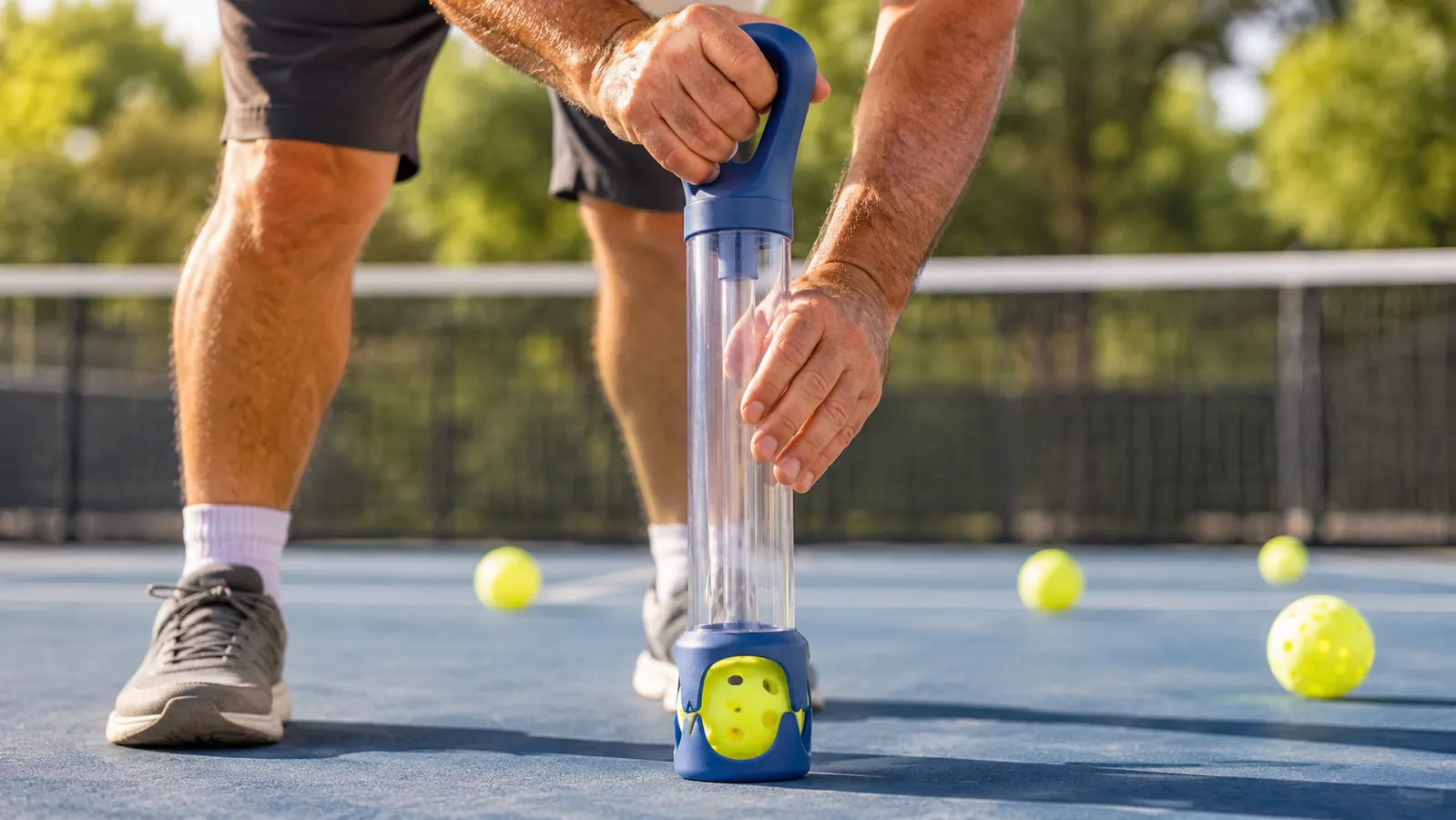
The first afternoon I owned it, I gathered balls first and figured out the tube second. I ended up with a pile at my feet, the tube in one hand, and no plan. The tool wants the opposite order. Set it upright on the court, intake end down, and press it straight down over a ball. The ball pushes up through the intake and stays inside. Lift, take a step, press again. Nothing about that motion involves your waist folding in half.
Two things matter in the press. First, keep the tube vertical. Lean it over and the ball can slide off to the side instead of going in. Second, use your arm and your body weight together rather than stabbing at the ball. I put my free hand on top of the tube and press down through my shoulder. It is a pound and a half of hollow polypropylene, so there is nothing to muscle. It either goes in or the ball is not sitting flat.
The tube does not care whether the ball is an indoor ball or an outdoor one. The listing calls it a proprietary intake system that picks up both, and in four months I have not found a ball it refused because of the surface. What it will refuse is a ball that is cracked, or one sitting in a seam or a low spot in the court where it cannot seat squarely. I nudge those with my shoe and try again.
Step 2: Herd the balls into clusters before you start pressing
Balls after a morning of open play are not conveniently distributed. They end up against the net, along the baseline, in the corner where the court meets the curb, and one always rolls to the far fence. Pressing is quick. Walking is slow. So I do the walking first, without the tube, and nudge balls with the side of my shoe into loose groups of five or six.
That one habit cut more time off my cleanup than anything else I tried. With clusters, I press five times in one spot, take three steps, press five more. Without clusters, I was walking a zigzag across the whole court with a tube in my hand and stopping every eight feet. The tube works one ball at a time, so the fewer separate places you have to stand, the better the whole thing goes.
Balls that stop against the net tape or a fence post need a nudge first. The toe of a court shoe rolled under the ball moves it out an inch, which is enough to get the intake over the top of it. I do not kick them. A pickleball that takes a full swing from a shoe can crack, and a cracked ball is a ball the tube will not pick up later.
Step 3: Walk a pattern, not a wander
I start at the baseline on my half and work in lanes, back and forth, from the fence line to the center strap. Then I cross the net and do the other half the same way. A pattern means I never stand in the middle of the court wondering whether I already covered that corner. I also never re-walk ground I have already cleared.
The tube stays in my left hand between presses and I press with my right. When it reaches about seventeen balls it stops taking more. You will know, because the next ball sits half in the intake and will not drop. That is not a fault. That is the capacity the listing gives, and it is a good time to walk back to your bag rather than fight it.
One thing I did not expect: the pattern keeps me from leaving balls behind. When I picked up by hand I would always miss two or three near the net and find them the next morning, flat or scuffed. Working in lanes, I see the whole surface in order, and there is nothing left in the corner when I walk off.
If two of you are cleaning up, split the court rather than working side by side. One person takes the odd lanes and the other takes the even ones, meeting at the net. Two tubes would be faster still, but I own one and I am not buying a second for a job that takes four minutes.
I press down seventeen times instead of bending over seventeen times. That is the whole method, and I did not need a cleverer one.
Step 4: Handle the awkward balls last, and kneel once
There are always a few the tube cannot take cleanly. A ball wedged against the fence post, one under the net cord, one that has rolled into the gap between the court and the grass. I leave those until the rest of the court is clear and then deal with them together, because each one needs a different nudge and then a second press.
For a ball against the fence, I put the toe of my shoe against it and roll it out toward me, then press. For a ball under the net cord, I lift the cord with the tube itself and press the ball on the other side. Doing that with a foot means standing on the net, which the park department does not appreciate and neither does the net.
Whatever the tube genuinely cannot get, I pick up by hand at the very end, on one knee, once. That is the trade I made. Instead of kneeling or bending seventeen times across a morning, I do it once for the two or three balls that need it. I am not claiming that is a cure for anything. It is fewer bends than I used to make, and fewer is what I was after.
Step 5: Empty it into a bag without spilling the lot
The first time I emptied it, I turned it upside down over the court and watched seventeen balls scatter back across the surface I had just cleared. Do not do that. I keep a mesh ball bag in my court bag, and now I hold the tube over the mouth of the bag and tilt it gently, letting two or three balls roll out at a time.
If you use a hopper or a bucket, the same idea applies. Mouth of the container under the tube, tilt slowly, let gravity do the work. There is no trick to it beyond not rushing and not pointing the thing at your own feet. Rush it and you will re-scatter a quarter of what you just picked up, which is a special kind of annoying.
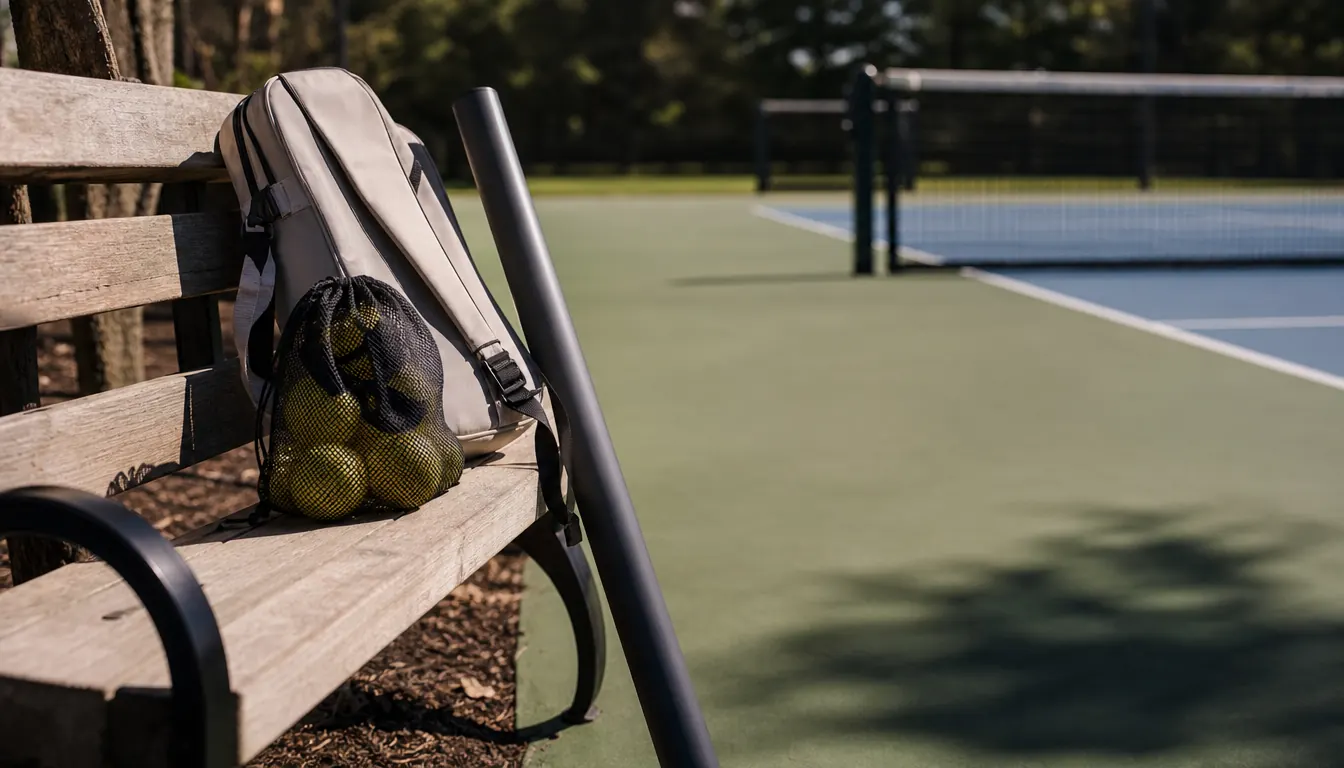
Then the Tourna tube goes back in the truck bed with the bag. It has ridden there through four months of Rhode Island weather and it still presses down straight. Polypropylene is not a precious material and the tube is not a delicate tool. That is part of why I keep using it instead of something with more parts to lose.
At the gym I do the same thing, with one difference. Indoor balls are lighter and the intake grabs them just as well, but the gym floor is slick and a ball can slide out from under the tube if you come down at an angle. Straight down, same as outdoors. That is the only adjustment I make between the two courts.
What Else Helps
The balls matter more than I expected. I use Tourna Strike outdoor balls, forty holes, seventy-four millimeter, and they hold their shape long enough that the tube keeps a grip on them. A soft or cracked ball sits in the intake and spins. If you are picking up a mixed bag of balls that has been in somebody's garage since 2019, expect the tube to refuse the worst of them.
Court shoes help, and not for the reason you would think. Pressing a tube down over a ball is a small balance move, and a dusty outdoor court is a slippery place to do it in running shoes. I switched to ASICS Gel-Dedicate 9s in March 2026 and I notice the grip more when I am standing on one leg leaning over a ball than when I am actually playing.
A fence is a free ball retriever. At the town park the courts are fenced, so most balls stop at the fence instead of rolling toward the parking lot. The community center gym has no fence, just bleachers, and balls go underneath. Indoors I lose more time crouching under the bottom row than I do pressing, and no tube fixes that.
A partner who gathers their own helps more than any gadget. Carol and I split the court after Saturday doubles, one half each, and we are done in the time it used to take me to do the whole thing alone. She does not use the tube. She uses her hands and a bag and she is faster than I am.
The last one is not equipment. Pick a moment for the cleanup that is not the moment everybody else is doing it. I wait until the group has finished talking and drifted toward the gate, then I work my half alone. Ten people chasing the same thirty balls is slower than one person walking lanes.
One more thing, and then I will get off it. If bending over is the part of pickleball that hurts, the tube is a way to stop doing that motion, not a treatment for why it hurts. I had tightness in my right elbow in my first season, I saw my own doctor about it, and I would tell anybody with a back or a knee that talks to them to do the same. I am an electrician, retired. I am not qualified to say anything else about it.
Seventeen balls, one trip, no bending
The Tourna pickup tube holds about seventeen balls and works indoors or out. It has been in my truck since July and it will be there next season.
Amazon See the current price on Amazon →