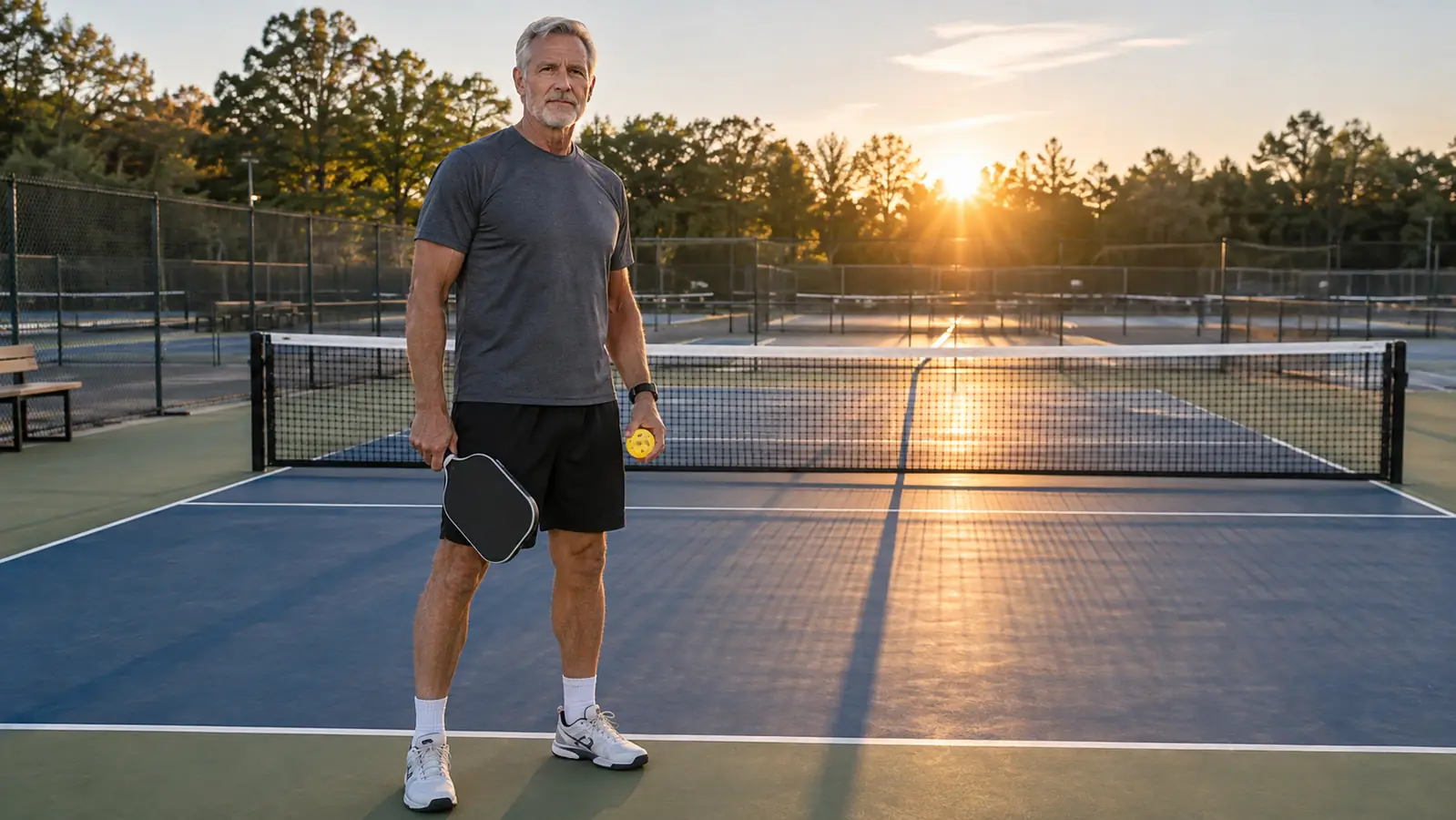
The first thing I noticed about the Onix Graphite MOD Z5 was not the pop or the spin. It was the handle. I had spent my first season and a half of pickleball playing with a paddle whose grip felt like a broomstick wrapped in tape, and the Z5's handle is built like a tennis racket's, with a flare at the bottom and a taper up toward the face. If you have ever swung a tennis racket, your hand already knows where to sit on it. That sounds like a small thing to put at the top of a review. It is not a small thing when you are 64, playing four or five mornings a week, and your hand has to find the same spot on the handle every single time without you thinking about it.
I bought this paddle myself on Amazon in August 2024, a few months after I closed my electrical shop and about six weeks after I first walked onto the courts at the town park down the road from my house. As of this writing it is still the paddle in my bag, still the one I reach for on a Saturday morning when Carol and I play doubles. That is the good news. The rest of this review is the part I wish somebody had told me before I unwrapped it, including the one fix that took me a week longer to make than it should have. I have no connection to Onix. Nobody sent me this paddle. I am not a coach and I am not a certified anything, just a retired electrician who reads the spec sheet and measures things.
The Quick Verdict
A forgiving wide-body control paddle with a tennis-style handle I still like after two years. The stock grip is thin, no cover comes in the box, and it will not win you a power game.
Amazon Check Today's Price →Two Years In, It Is Still the Paddle I Reach For
I bought the Onix Z5 in August 2024 with my own money and it has not left my bag since. If you want the forgiving wide face and the soft graphite response, here is where to look at it.
Amazon Check Today's Price on Amazon →How I've Used It, and What This Review Is Based On
My week looks the same most of the year. Open play at the town park four or five weekday mornings, roughly eight until ten thirty, April through early November, then the community center gym with indoor courts once the weather turns. Saturdays are doubles with Carol. I have played this paddle outdoors on coated asphalt courts and indoors on a gym floor, and I am well past four hundred sessions with it at this point, which is more than enough time for a paddle to show you its weaknesses.
I am a solid intermediate in open play and I do not claim to be anything more. I am right handed and I play almost nothing but doubles. My game is dinking, blocking and keeping the ball low, and I would rather place a shot than win a point with pace. That matters for this review, because a paddle that suits a placer may not suit a banger, and I am not going to pretend otherwise just to sound balanced.
Everything below comes from my own two years with the Onix Z5 plus the numbers on the listing. Where I quote a spec, it is because the listing says it. Where I describe a feel, it is mine. Where I say I do not know something, it is because I genuinely do not.
The Grip Is the First Thing I Would Change
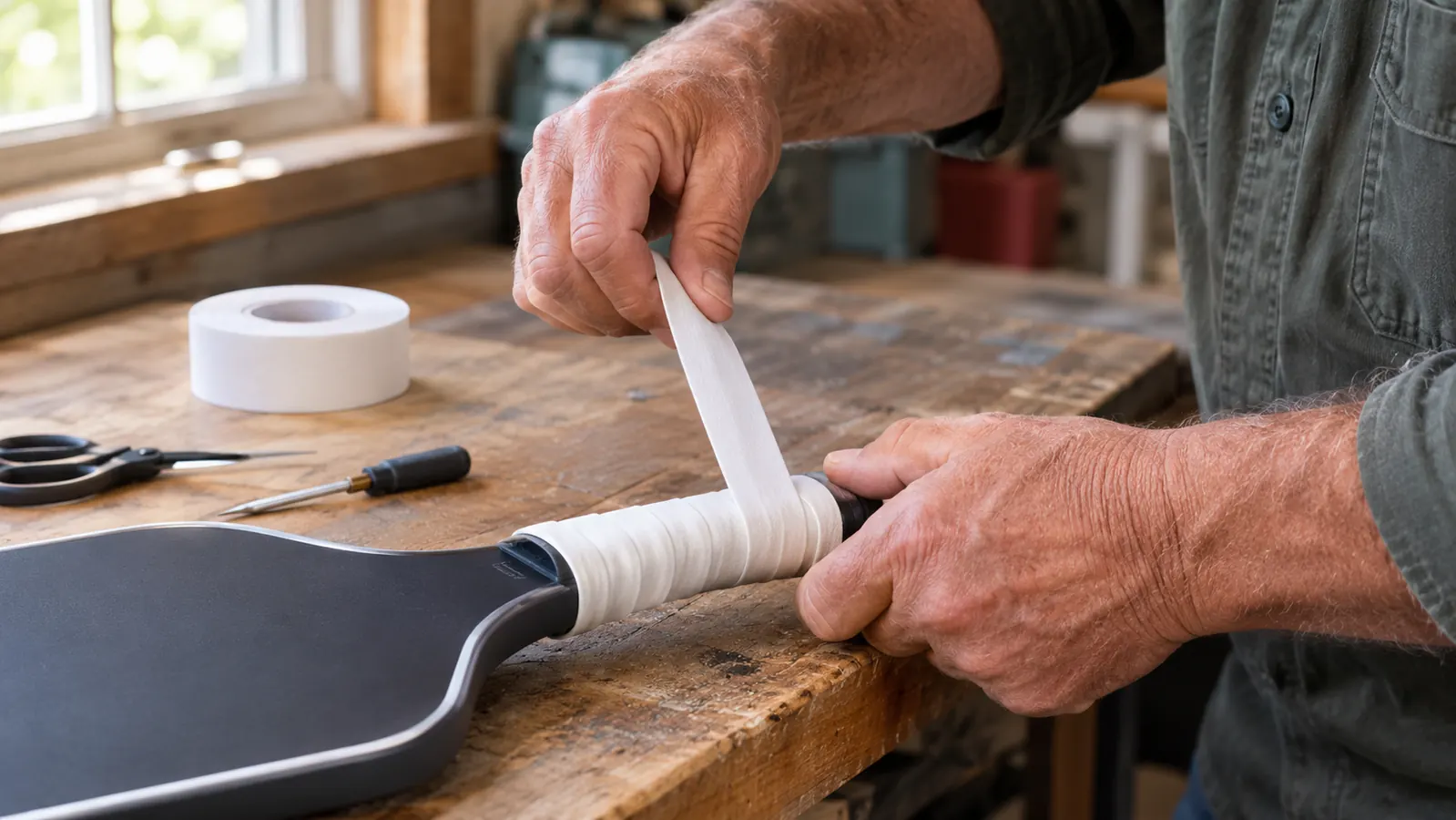
The handle has a tennis-racket shape and the listing puts the grip at 4 1/4 inches. For my hand that is a starting point, not a fit. I have long fingers and a working man's palm, and the stock grip felt thin enough that I found myself squeezing harder than I wanted to, especially on backhand dinks where the whole point is to be gentle with the ball. A tight grip on a soft shot is a bad combination.
I wrapped an overgrip on it in the first week and the problem went away. That is the entire fix, and it takes about five minutes if you have done it before and about fifteen if you have not. But it is worth saying plainly to anyone reading this before they buy: the paddle you unbox is not quite the paddle you will end up playing with, and you should plan for that. I have replaced that overgrip four times now. The handle underneath is still the handle, and it has not compressed or come loose.
The shape of the handle is the part I would keep exactly as it is. The flare at the base sits against the heel of my hand and stops the paddle rotating on off-center hits. I notice it most on low backhands where I catch the ball near the bottom edge of the face. With the paddle I learned on, that shot would twist the whole thing in my hand and the ball would go sideways. With this one it stays square. Your hand may disagree with mine, but for my hand the tennis shape is the best single thing about the design.
The Weight Number Tells You Less Than You Think
The listing says 7.84 ounces. Mine came in right about there when I put it on the kitchen scale, close enough that I stopped weighing it and went back to playing. What the number does not tell you is how the weight sits in the hand. To me this paddle swings lighter than 7.84 ounces sounds, and it does not drag the way some heavier paddles do when you are bringing it through late on a ball.
That matters at 64 more than it would have at 40. By the third or fourth game of a Saturday morning my shoulder knows exactly how much paddle it has been lifting, and with the Z5 I finish a session without that tired, heavy feeling in my arm. The gym mornings are longer and slower and I notice it less there. I have handed the paddle to a friend at open play who swings something heavier, and he handed it back saying it felt light to him. He is not wrong. It is a control paddle, not a hammer.
The place a light paddle shows its limits is on drives and overheads. I can put a ball away when I get my body behind it and step into the shot. When I am lunging, or late, or reaching, the ball does not carry the way it does off a heavier paddle. I noticed that constantly in my first year and I notice it less now, because I stopped trying to win points with pace and started placing them instead. That is a change in me, not in the paddle, and I would rather tell you that than pretend the Onix Z5 hits harder than it does.
What the Graphite Face and Nomex Core Actually Do on a Court
The face is graphite and the core is Nomex honeycomb, both per the listing. What that translates to in play is a soft, quiet response. Dinks sit down where you put them. Blocks in the transition zone stay in the court instead of popping up for somebody to put away. I mis-hit less with this paddle than with the wood starter set I learned on, and my unforced errors have stayed low since I switched.
Spin is the part I did not expect. The graphite face grabs the ball more than the slick plastic I was used to, and my serves and third-shot drops started moving in ways I had to learn to control. For about a month I was cutting the ball too much and leaving them short in the net. That was me, not the paddle, but it is a real adjustment if you are moving up from a cheap starter paddle. Expect a few weeks of recalibrating what a soft shot feels like.
It plays differently indoors, and I want to be honest that I like it a little less on a gym floor. The gym uses its own indoor balls, the ball comes off the face slower, and the soft response that feels so good outdoors feels a touch muted in the winter. It is not a deal breaker and I still play with it, but if all your pickleball is indoors, that is a factor. I have no indoor-specific paddle to compare it with, so I will leave it at that.
I mis-hit less with this paddle than with anything I played before it, and that is the most honest thing I can say about a piece of equipment.
What Two Years of Outdoor Play Has Done to It
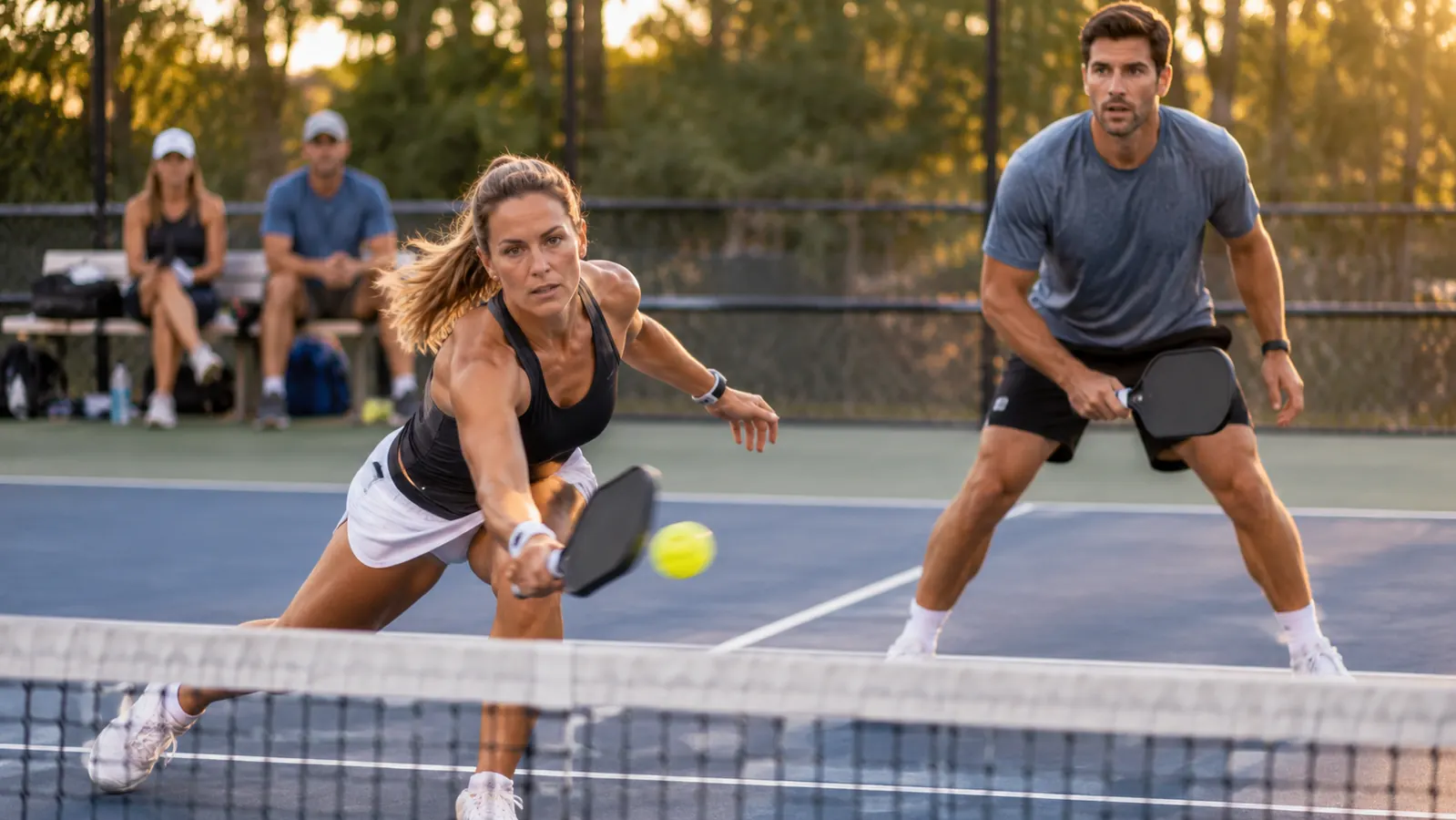
I play on coated asphalt courts that eat paddles for breakfast, and the Z5 has held up better than I expected. The face is scuffed where the ball hits, the graphics have worn smooth where my hand sits on the handle, and the whole thing has the dull sheen of something that has been used hard. None of that affects how it plays. Nothing rattles when I shake it, nothing has separated, and the edge has not chipped.
The grip is the part that ages fastest, and that is true of any paddle, not just this one. The stock grip under my overgrip is starting to feel polished, and I will replace the overgrip again before the weather turns. That is normal maintenance, not a defect. You replace the tires, you do not replace the car.
The warranty is one year limited, per the listing. I have not had to use it, so I cannot tell you what the claim process is like, and I will not pretend I know. I can tell you that one year is about what I would expect at this level and not a reason to buy the paddle on its own. If you do buy one, save the order and note the date. It is easy to forget when the clock started.
The Tradeoffs Nobody Mentions in the Listing
No cover comes with it. The listing lists a pickleball paddle and a pickleball paddle is what arrives, so the first thing I did was dig an old cover out of a box in the garage. If you carry your paddle loose in a bag with keys, a water bottle and a phone, order a cover at the same time or you will end up doing what I did. It is a small thing that is annoying out of proportion to its size.
The shape is the other tradeoff, and it cuts both ways. The Z5 is a wide-body, standard-length paddle at 15.5 inches long and 8.3 inches wide. That wide face is why I like it. The sweet spot is big and the paddle forgives a hit that is a half inch off center. It is also why I lose a little reach on a ball out to my backhand side. An elongated paddle would give me that reach back and would take away some of the forgiveness. I have never owned an elongated paddle, so I am not going to tell you which one is better. I can only tell you which one I chose.
There is also a learning curve if you come from tennis or from a hard plastic paddle. This paddle rewards a slower, smoother swing, and for the first month I was hitting long because my instinct was to swing hard. Once I dialed it back, the control showed up. If you are the kind of player who wants to swing away, you will fight this paddle for a while, and it will win.
One more thing, and I say it as a man with no medical training. I had some tightness in my right elbow in my first season, before this paddle, and I dealt with it with rest and a lighter grip after I saw my own doctor about it. I am not going to tell you a paddle fixes an elbow. If yours is hurting, talk to your doctor first, then think about equipment.
What I Liked
- Tennis-shaped handle with a flared base that keeps the paddle from twisting in your hand
- Wide 15.5 by 8.3 inch face gives a forgiving sweet spot on off-center hits
- Graphite face and Nomex core produce a soft, controlled response for dinks and blocks
- Listed at 7.84 ounces, light enough that my shoulder is fine after a full morning
- Still my main paddle after two years of outdoor play, with no rattles or separation
Where It Falls Short
- Grip is listed at 4 1/4 inches and felt thin in my hand until I added an overgrip
- No cover in the box or on the listing, so you will want one
- One year limited warranty is the minimum I would expect, not a standout
- Not a power paddle. Late or lunging shots do not carry
- Graphics wear where my hand sits, cosmetic only
Who This Is For
This paddle suits a doubles player who has gotten past the flailing stage and wants to place the ball. If you dink, block, reset and play the soft game, the wide face and the graphite response will feel like a tool. It suits older players, not because it is marketed that way but because 7.84 ounces is light enough to hold up through a long morning. It suits players coming from tennis, because the handle shape is familiar from the first swing. And it suits anyone who wants one paddle to cover outdoor and indoor play without buying two.
Who Should Skip It
Skip it if you want a power paddle and you play a banging game from the baseline, because this is not that paddle. Skip it if you need reach and you have been thinking about an elongated shape. Skip it if you have large hands and you are not willing to wrap an overgrip, because the stock grip will feel small to you. Skip it if you are brand new and still changing your grip every week. Settle your grip first, then buy a paddle that matches it. And if your elbow, wrist or shoulder is giving you trouble, that is a conversation for your doctor, not for a retired electrician with a paddle review.
If You Want the Forgiving Face and the Soft Feel
The Onix Z5 is the paddle I bought with my own money and still play with two years later, thin stock grip and all. Look at the current listing and see whether the numbers match what you actually need.
Amazon Check Today's Price on Amazon →