
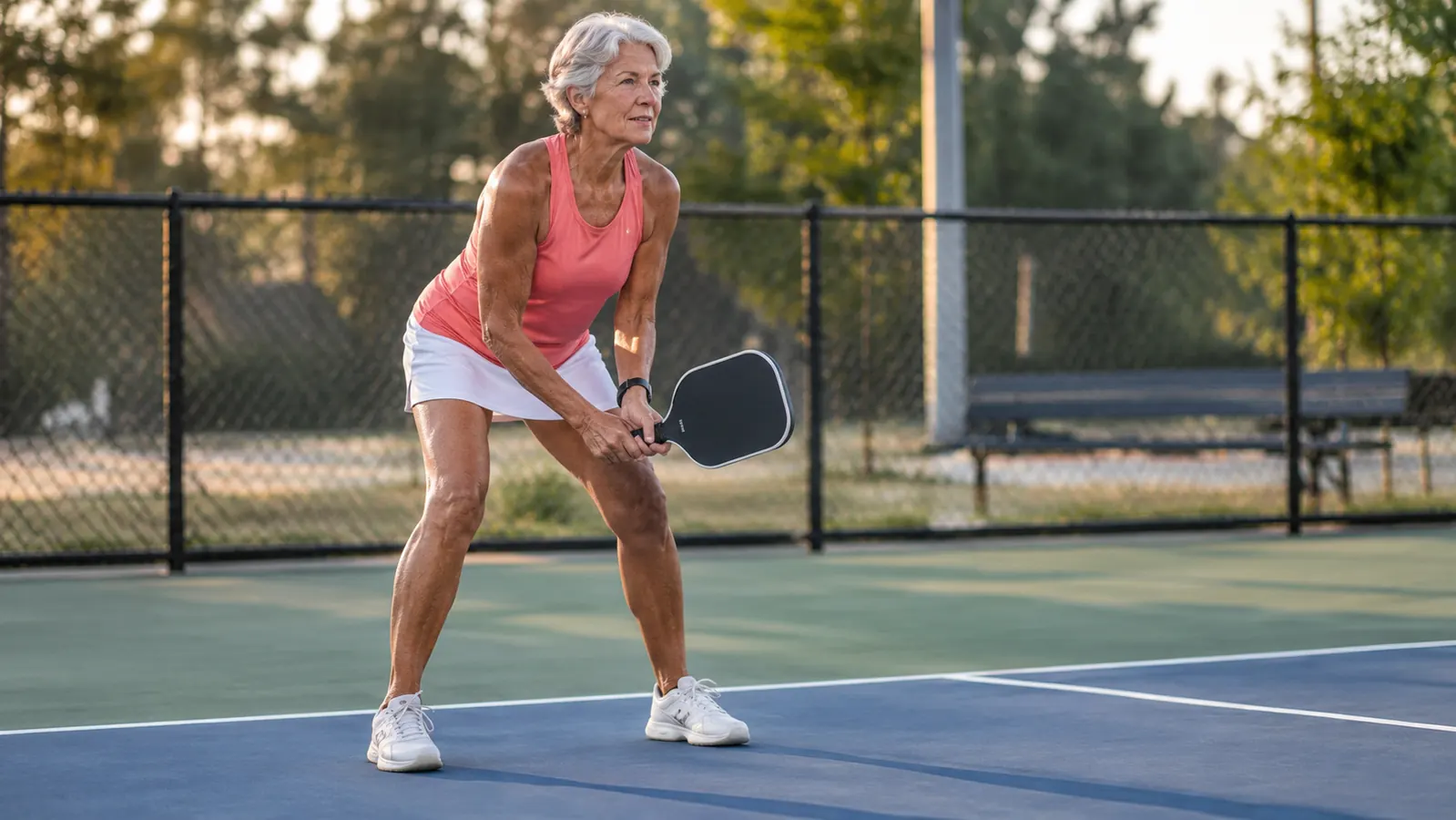
Here is what almost no shoe review tells you: the first month means nothing. A court shoe feels fine in the store, fine on the first Thursday, and then somewhere around week six the foam either holds up or it does not, the laces either stay tied or they do not, and your toes either settle in or they start to complain. I bought a pair of ASICS Gel-Dedicate 9 court shoes in March 2026 with my own money, after a year and a half of playing pickleball in running shoes. I have worn them four or five mornings a week since. This is the version of the review I wanted before I ordered, and it includes the parts that are not flattering.
The short version is this. The ASICS Gel-Dedicate 9 is a lace-up athletic shoe with a rubber sole, a foam insole, moderate cushioning and a closed toe, and the listing states plainly that it is not water resistant. It does the one thing my running shoes could never do, which is stay put when I plant and change direction. It is not perfect. There is a sizing question you have to settle before you order, the toe box takes a couple of weeks to stop making itself known, and a dewy October morning at the outdoor courts taught me exactly what not water resistant means. I will get to all of it.
The Quick Verdict
A plain, honest court shoe that holds the court under an intermediate recreational player. Buy it for the grip and the low, flat ride, not for cushioning or for weather.
Amazon Check Today's Price →Eight months in, these are still the shoes I reach for on a Tuesday morning
The listing shows 4.3 stars across about 2,300 buyers. Sizes move, so check the run before you order.
Amazon Check Today's Price on Amazon →How I've Used Them
My schedule is boring and consistent, which makes it a decent test. Open play at the town park ten minutes from my house, four or five weekday mornings, eight o'clock to about half past ten, April through early November. Saturday doubles with my wife Carol. In the cold months I move indoors to a community center gym with a wood floor and a ceiling low enough that I have hit it once with a lob. The shoes have been on my feet for all of it except the drive over, because I change at the courts and keep them in a bag behind the seat of the truck.
I wore running shoes for my first year and a half of pickleball, the way most people start, and I liked them until the morning my foot slid out from under me on a stop near the kitchen line. Nothing happened. No fall, no damage, no dramatic story. But it got my attention, and it made me read up on what a court shoe actually does differently, which is mostly a flat, low sole with a rubber compound meant to grip a hard surface, instead of a soft, thick sole meant to absorb repeated forward impacts. That is the whole case for switching, and it is a good case.
The difference outdoors versus indoors is worth one line. On the textured outdoor courts the sole grips and I forget about it. On the smooth gym floor the grip was almost too much for the first few sessions, and I will explain that in a minute, because it is the part of the honest review that a listing will never mention.
Two housekeeping notes so you know what you are reading. I am not a coach, not a certified instructor, and not a physical therapist. I am 64, I am a retired electrician who ran his own shop for 28 years, and I play a lot of pickleball and read spec sheets. When I say something felt more stable to me, that is exactly what I mean and nothing larger. If you have a knee, hip, ankle or back issue, talk to your doctor about footwear and about the sport itself. A shoe is a shoe.
The Fit, Which Is the Part That Trips People Up
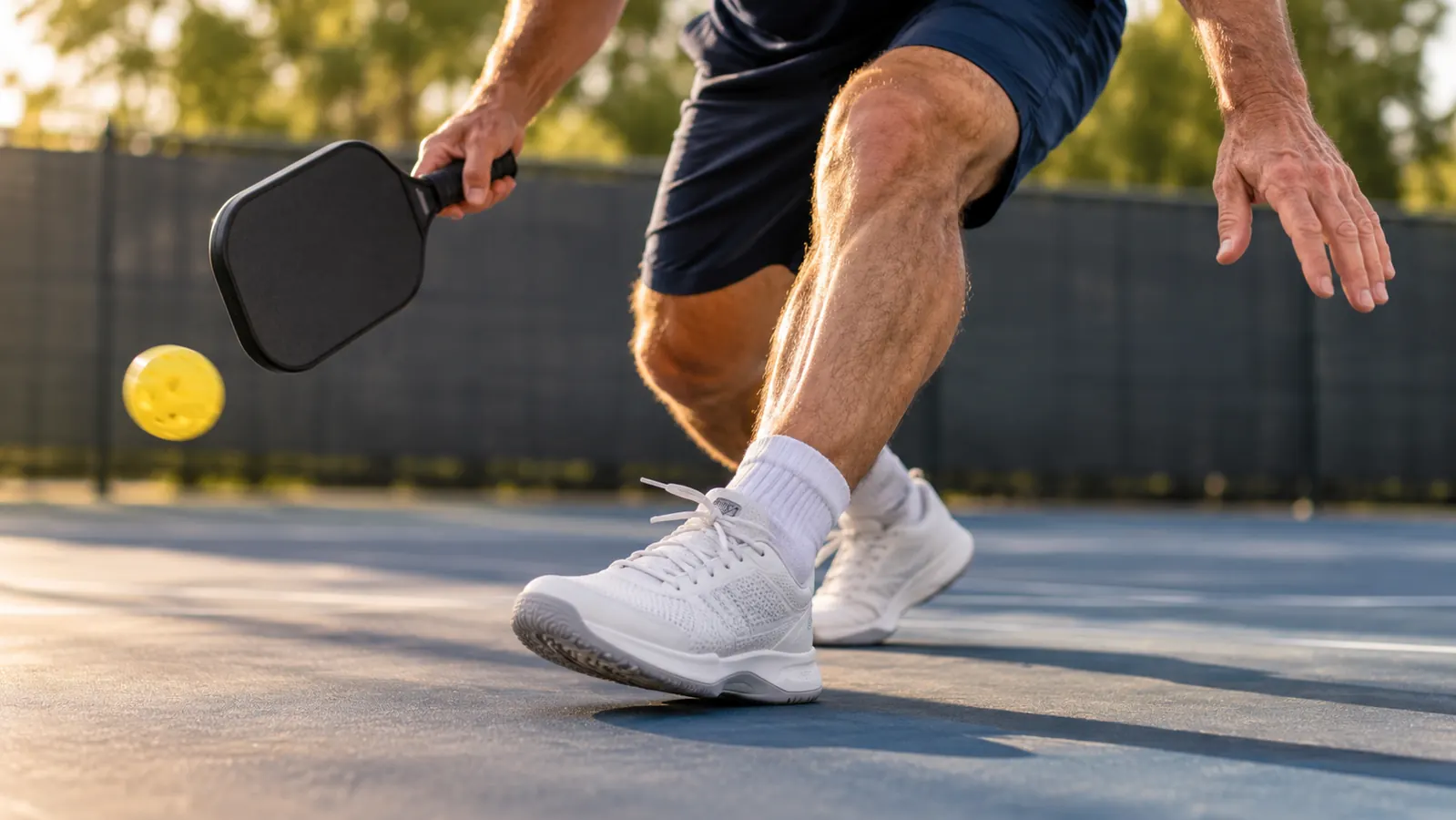
The length ran true for me. I ordered my usual size and my heel sat where a heel should sit, with a little room ahead of the longest toe and no slipping at the back when I walked around the house. That part was easy. The surprise was the shape over the top of my foot. This is a low, close shoe with a closed toe, and the upper sits near the toes rather than floating above them. For the first two weeks I was aware of the sides of my little toes for the last twenty minutes of every session. Not pain exactly. More like a reminder that something new was on my foot.
Somewhere in week three that went away. I do not know whether the upper softened or my foot gave up arguing, but the shoes stopped being a topic. I have a normal to slightly wide forefoot, and I would describe the fit as snug rather than roomy. If you have a wide foot or a high instep, or if your feet swell in the heat the way mine do in August, my advice is to order your normal size, try them on carpet with the socks you actually play in, and be ready to send them back if your toes are touching the front when you stop hard.
That is the test, by the way. Not standing still in a shop. Stopping. Your foot slides forward inside any shoe when you decelerate, and the front of the shoe is where you find out whether you bought the right size. Do that on a carpeted floor a few times before you take the tags off, and you will know more than a size chart can tell you.
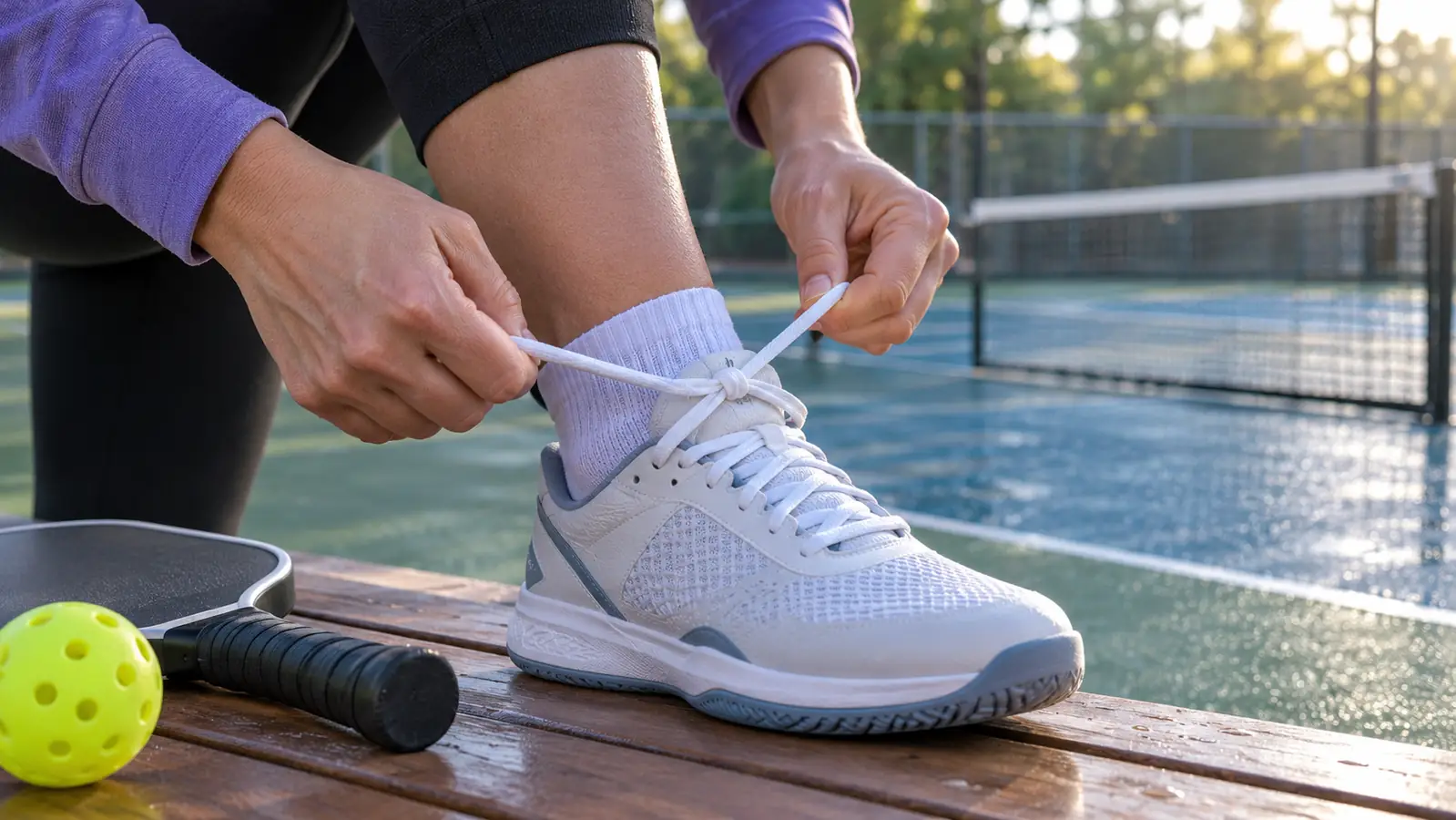
The closure is a plain lace-up, no strap and no extra hardware, which suits me. I double knot, and I have not had a lace come loose mid game, though I also retie between games out of habit from years of job sites. The listing describes the shoe as having a logo as its special feature, which is the most honest line in any product listing I have read this year. There is no pump, no dial, no strap system. It is a laced court shoe and it does not pretend otherwise.
I stopped thinking about my feet somewhere in week three, and eight months later they have not come back up as a topic.
Grip, and the One Surface Problem
The sole is rubber and the profile is flat and low, and on the textured outdoor courts at the park it grips the way I wanted it to. I plant, I change direction, I do not think about it. The first couple of sessions indoors on a smooth gym floor felt different, close to too grippy, the kind of grip that stops your foot dead and sends the message up your leg. That eased off as the surface of the sole picked up a little dust, and now the gym feels fine too. If you go straight from the box to a polished indoor floor, expect a session or two where you feel the floor more than you would like.
Here is the part the listing buries. The water resistance level reads not water resistant. That is the manufacturer's own wording, and it is accurate. Outdoor courts in October hold dew until mid morning. The first time I cut across the grass edge to chase a ball at eight fifteen, my socks came back damp, and by the third game I could feel it. Nothing fell apart. The shoes dried overnight on the porch. But if you play early on wet grass or on an uncovered court after rain, you will get wet feet, and no amount of good grip changes that. Keep a spare pair of socks in the bag. I do now.
The other thing I noticed, and I liked, is how little shoe there is between my foot and the court. The cushioning is described as moderate and the insole is foam, and that reads right. I feel the court, which I want for balance, and I do not feel beat up after two and a half hours, which I also want. If you are looking for a soft, pillowy ride, this is not it. If you want to know where the ground is, this is exactly it.
The Break-In, Week by Week
Week one: I noticed the shoes constantly, the way you notice any new pair. The upper pressed lightly across the tops of my toes, the sole felt stiff under the ball of my foot, and I finished each session aware of my feet. Nothing hurt. Everything was simply present. I also had a small hot spot on the outside of my right heel, which I solved with a thicker sock rather than with anything clever.
Weeks two and three: the upper softened across the flex point, the sole loosened up enough that I stopped noticing the stiffness, and the hot spot disappeared on its own. By the end of week three I could not have told you what the shoe felt like new, which is the highest compliment a piece of equipment can get. The toe box stopped pressing. Nothing else changed, because there is nothing else to change.
Durability, Eight Months In
The outsole is where I expected wear and the outsole is where I found it, under the ball of my right foot and along the inside edge of the toe. I drag that toe when I serve, a habit I have not fixed in two years of playing. After eight months there is visible scuffing and the tread pattern in that spot is shallower, but nothing has worn through and nothing is peeling. The rubber is still doing its job.
The most noticeable change is inside. The foam insole has packed down under the ball of my foot, which after eight months of mornings on a hard court is not a complaint, it is physics. The forefoot feels thinner than it did in April. I am considering a thin aftermarket insole, and if I do, that is ordinary maintenance rather than a defect. The upper has creased across the toe box and around the flex point behind the toes. No tears, no separation at the sole, no stitching letting go. The laces are original and slightly fuzzy.
For scale, the listing gives a product weight of 2.2 pounds. I did not put them on a kitchen scale, so I cannot tell you whether that is one shoe or the pair, and I am not going to pretend I know. The listed dimensions are 12.44 by 6.3 by 4.75 inches, which is a shoe box measurement rather than a fit guide, so do not try to size from it. What I can tell you is that they feel light on my foot and they do not feel like a heavy work boot, which is the comparison a retired electrician is actually qualified to make.
What I Liked
- Rubber sole grips a textured outdoor court without drama
- Low, flat ride that lets you feel the court under you
- Lace-up closure with nothing to break
- Still structurally sound after eight months of weekday mornings
- Closed toe and snug upper hold the foot on hard stops
Where It Falls Short
- Not water resistant, so dew and wet grass get through to your socks
- Snug toe box takes two to three weeks to settle
- Moderate foam cushioning packs down at the forefoot over time
- The listing gives no width guidance, so wide feet are a try it before you commit situation
What the Listing Does Not Tell You
Two fields in the Amazon listing are worth knowing before you click buy. First, the sport type reads volleyball. That is a data entry quirk, not a claim about the shoe. The title says pickleball and tennis shoes, and that is how I use them, on hard outdoor courts and on a gym floor. Second, the special features field reads logo. There is no technology story here, no new plate, no springy anything. You are buying a lace-up court shoe with a rubber sole and moderate foam, and the ASICS name on the side.
That is not a knock, and it is not me being cute. Half the reason I like these is that there is nothing to go wrong. No strap to fray, no dial to strip, no liner to lose. The fit and the sole are the entire pitch. For a 64 year old playing four mornings a week at a town park, that is a feature, not a gap.
Who This Is For
This is for the player who has been showing up in running shoes and has started to feel their feet slide, or who wants a plain, low court shoe without paying for technology they will never use. It suits an intermediate recreational player, doubles mostly, two to three hours at a time, on outdoor hard courts. It suits someone who wants to feel the ground under them. It suits anyone who would rather buy one sensible thing than three clever ones. I play Saturday doubles with Carol in them and I have not had a complaint worth writing down.
It also suits the reader who is fine with a shoe that looks like a shoe. Nothing on this pair announces itself. If you want the loudest thing on the court, this is not that. If you want to lace up, play, and think about your next shot instead of your feet, this is a good place to stop shopping.
Who Should Skip It
Skip it if you need a soft, cushioned ride, because this one is firm and close. Skip it if you play early mornings on dewy grass or on uncovered courts after rain and you hate wet socks, because the listing says not water resistant and it means it. Skip it if your feet are wide or your toes are sensitive, unless you are willing to try your normal size on carpet and send it back if the front is tight when you stop. And if you have a knee, hip, ankle or back problem, do not take a shoe review as advice about your body. See your doctor first, then buy shoes with that answer in hand.
The plain shoe that finally stopped me sliding on a hard stop
Lace-up, rubber sole, moderate foam, and about 2,300 reviews at 4.3 stars. Check the size run before you commit, then test them on carpet with your game socks.
Amazon Check Today's Price on Amazon →