
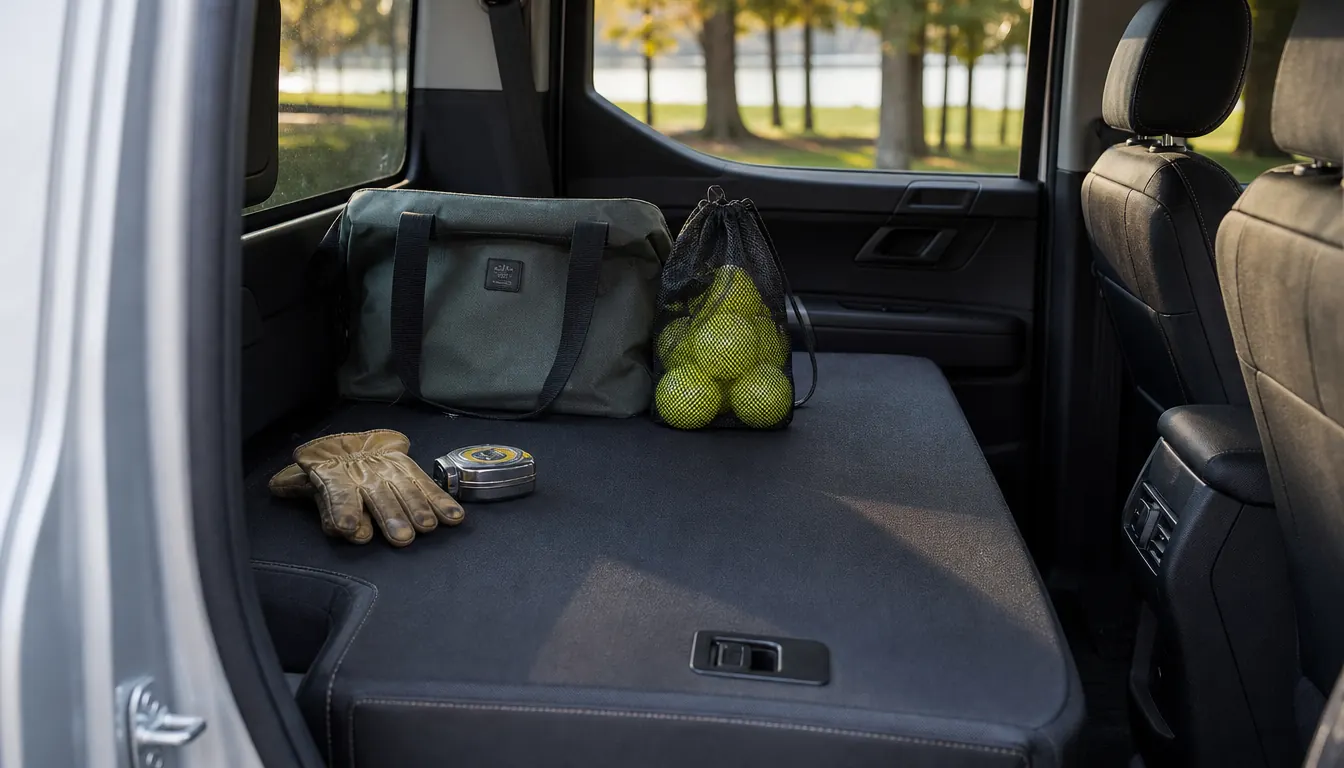
The back seat of my pickup folds down flat, and for the better part of two years that flat space was where my pickleball gear went to die. A paddle wrapped in a bath towel. A mesh bag of loose balls that slid under the seat every time I turned a corner. A water bottle rolling around on its side. My truck keys somewhere in the pile, under a damp towel, every single time. I am 64 years old. I ran Mercado Electric, a small residential and light commercial shop, for 28 years before I retired in the spring of 2024, and I am old enough to know better than to keep a truck full of loose gear.
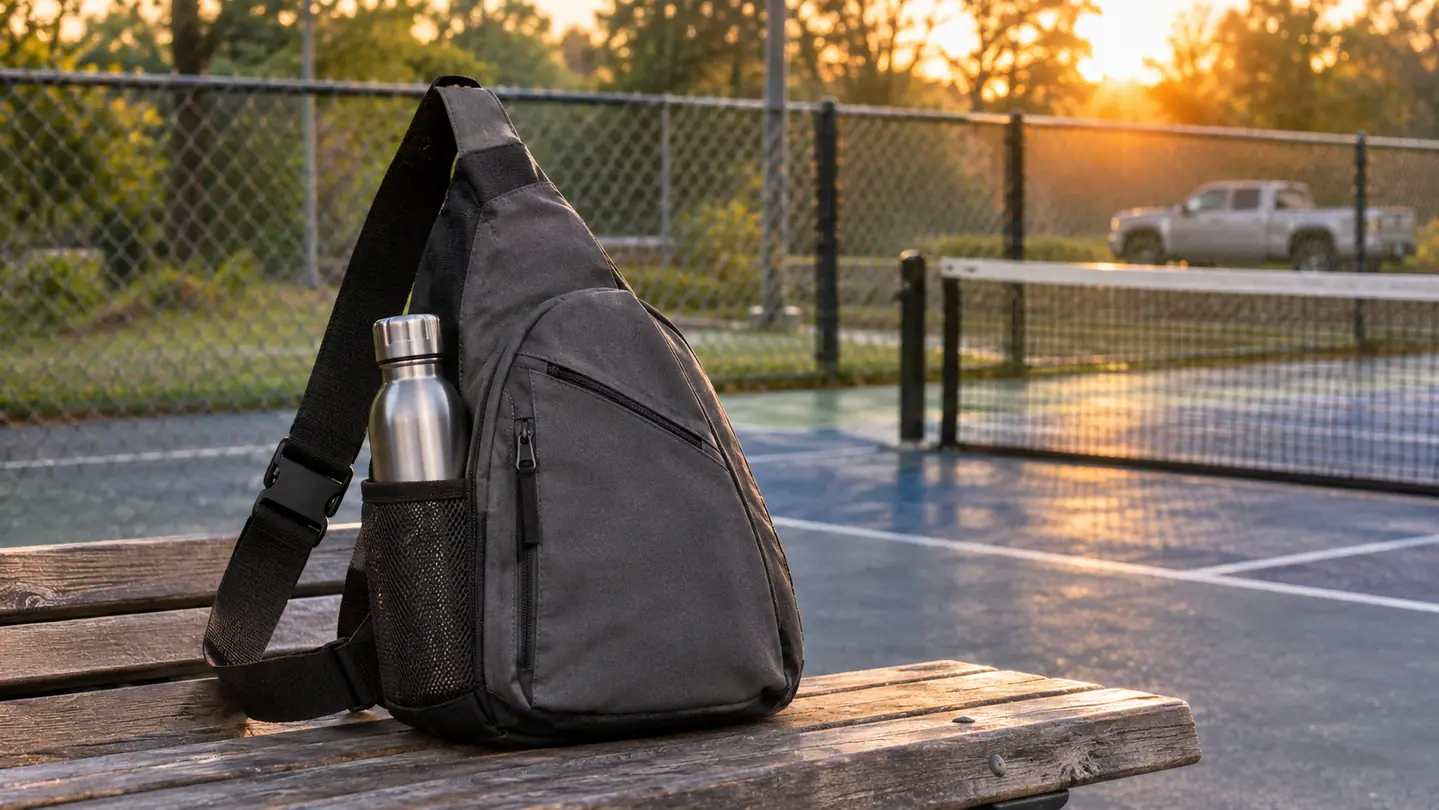
I bought the Franklin Sports pickleball sling bag in May 2026, and it has ridden behind the seat of that truck ever since. Four or five weekday mornings a week it goes to the courts with me, and it goes on Saturdays when Carol and I play doubles. It is a sling, not a duffel and not a wheeled bag. Polyester shell, soft sided, a zipper across the top, one adjustable strap. The listing says it holds up to six paddles, weighs 15.2 ounces empty, and measures 18.5 inches long by 13 inches wide by 8 inches deep. What sold me was one line in the feature list: a built-in fence hook inside the largest pocket.
Before that I carried a gym bag, and I want to be fair to it, because I hauled one to the courts for two seasons. But a gym bag is a big open hole with a zipper on top. A paddle goes in with a towel and a bottle and a bag of balls, and the paddle comes out with a scuff on the edge because something heavy shifted on the drive over. My keys went in the side pocket and then fell out of the side pocket. My phone went in my shorts and got sweaty.
I tried the obvious fixes. I hung a hook in the garage and parked the gym bag on it. I put the balls in a plastic tote and the tote in the bed of the truck, and then it rained. I bought a second, smaller bag for the paddle alone, which meant carrying two bags the hundred yards from my parking spot to the courts, and I forgot one of them twice in the same week.
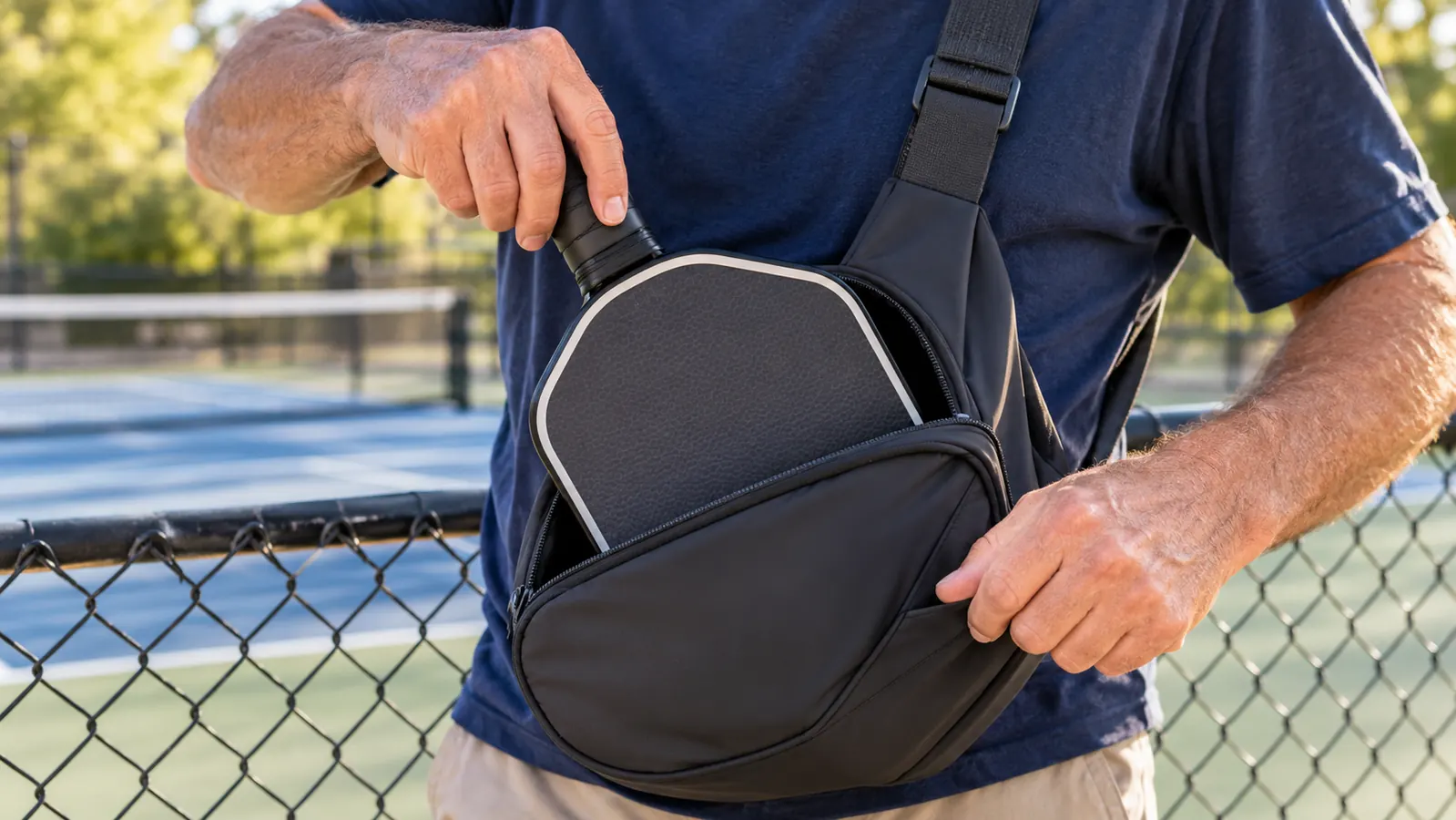
The sling bag replaced all of it. One bag, one strap over the shoulder, one zipper, and everything I bring to open play lives inside it. My paddle and Carol's paddle go in the main compartment. Loose balls go in with them. My keys and my phone go in the padded pocket built for them, which means I stopped patting my shorts pockets at the baseline.
The fence hook is the part I did not know I needed. Franklin builds it into the inside of the largest pocket. You flip the top open, hook the bag on the chain link at the court, and your gear is off the ground and out of the dew. I use it every outdoor morning from April to early November. In January, at the community center gym, I hang it on the bench rail instead and it does the same job. That one detail changed my mornings more than anything else about the bag.
You flip the top open, hook the bag on the chain link at the court, and your gear is off the ground and out of the dew.
The Fence Hook Is the Reason This Bag Stays in My Truck
If your gear rides in a vehicle and your home courts have a chain link fence, look at that hook before anything else. My paddle, Carol's paddle, the balls, the towel and my keys all live in one bag now.
Amazon Check Today's Price on Amazon →It is not a perfect bag and I would not pretend otherwise. It is a sling, so everything rides on one shoulder. With two paddles, a dozen balls, a towel and a full bottle, it is fine for the walk from my truck to the courts. I would not want to carry it around a tournament site all day, and I would not want to walk a mile with it. There are no wheels. The listing says one size, and one size is what you get.
The fence hook lives inside the largest pocket, so you have to open the bag to use it, and if you zipped a wet towel in there the night before, you will notice. That is a small thing. It is also the only complaint I have after all those mornings. The Franklin warranty is a 90 day limited one, which tells you what the maker thinks the seams are worth betting on. Mine have held.
What it did do was end the pile on the folded back seat. The bag sits behind the seat with the ball tube in the bed. I get to the courts, put the strap over my shoulder, walk to a fence, hook it, and I am done unloading. Nothing rolls under the seat anymore. Nothing slides across the floor when I take a corner.
One more thing worth saying plainly. I am not a coach, I am not a certified instructor, and I am not going to tell you a bag improved my game. It did not. I mis-hit plenty of dinks in June and I mis-hit plenty in October. What I will say is that it felt tidier, I stopped losing things, and I stopped showing up to the courts with a paddle that had been sliding around under a towel.
What I'd Tell You If We Were Sitting at My Kitchen Table
If you already have a bag you like and it lives in a locker or on a shelf in your garage, you do not need this one. Keep what you have. This bag solves a specific problem, and the problem is a vehicle. My gear rides in a truck, my home courts have fences, and I was tired of sweeping it all up off a folded seat every morning.
If that sounds like you, then do two things before you order. Measure the spot in your truck where you plan to keep it, because the listing gives 18.5 inches long, 13 inches wide and 8 inches deep, and that is roughly a small duffel lying on its side. Then think honestly about how many paddles you actually haul. Franklin Sports lists six as the capacity, and the bag will take six, but you will feel six on one shoulder. I carry two and I am glad of it. Carol and I measured that bag against the seat of the truck the way I used to measure conduit runs against a wall, and it fit. That was the end of the loose gear, and Franklin got the bag right where it counted for me.
If Your Gear Lives in a Truck, Start Here
One strap, one zipper, one hook on the fence. Polyester shell, soft sided, 15.2 ounces empty, and a padded pocket for the keys and phone you keep losing.
Amazon Check Today's Price on Amazon →