
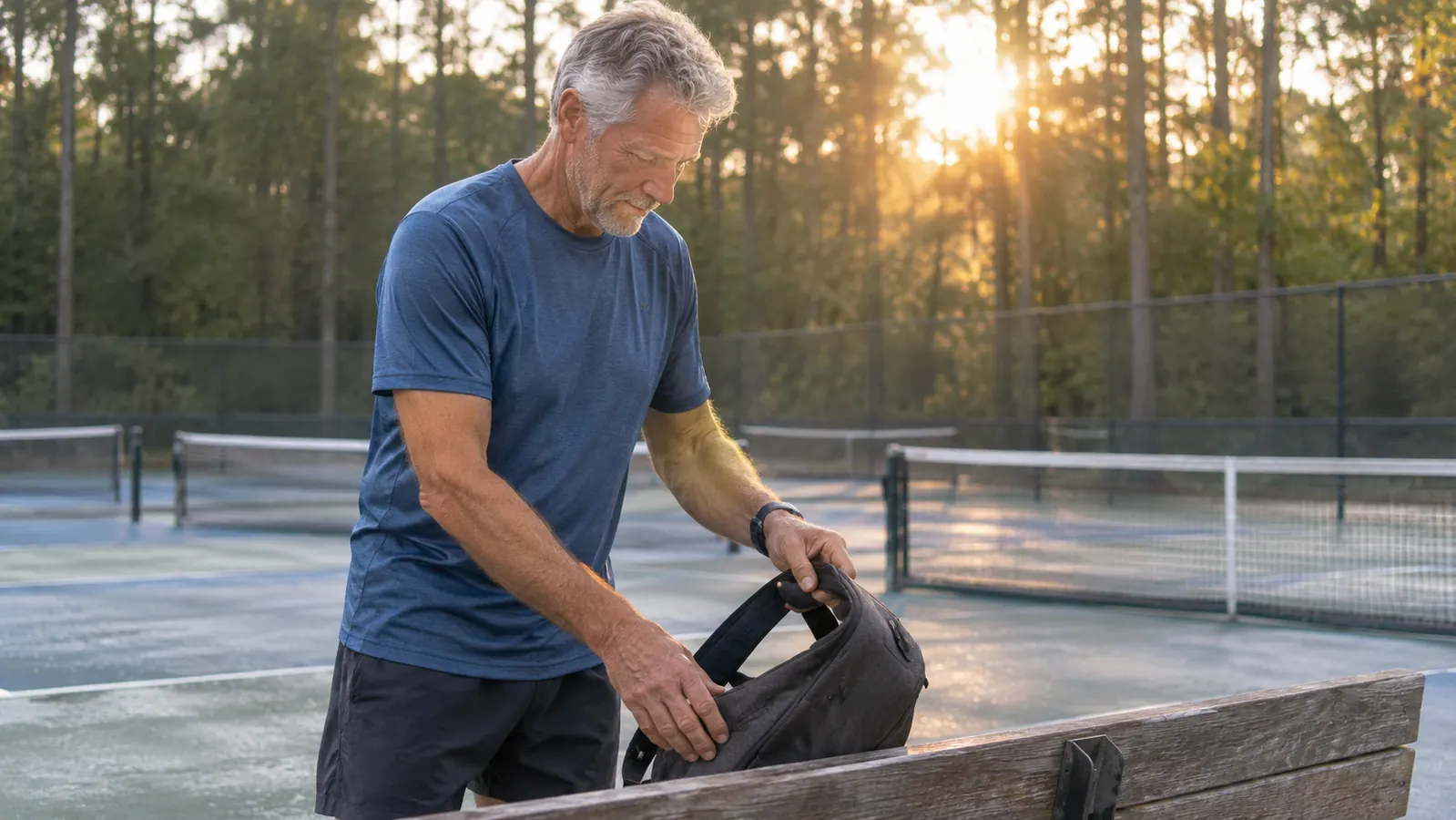
The first time I showed up for open play without my paddle, I was already parked. I had the water, I had the shoes on my feet, I had driven ten minutes to the town park. What I did not have was the one thing I came for. I sat there in the truck for a minute, laughed at myself, and drove home.
That was the morning I stopped packing a bag at 7:40 and started packing it the night before. I use a Franklin Sports pickleball sling bag now, bought in May 2026, and the routine below is the one I actually follow. It is not complicated. It is five steps, done after dinner while the coffee maker is being set for the morning. The point is that by 7:45 the next day, nothing is a decision anymore.
The bag that ended my forgetting-the-paddle mornings
A sling bag built for pickleball, with a padded phone and key pocket, a built-in fence hook inside the largest pocket, and room the listing puts at up to six paddles. It is the one I load the night before.
Amazon Check today's price on Amazon →Why the night before and not the morning
Morning people will tell you to lay things out the night before. I did not listen to that advice for about twenty years of running a shop, and I paid for it in forgotten lunch bags and misplaced keys. What changed my mind was not discipline. It was noticing that at 7:40 in the morning I am making decisions with about sixty percent of the brain I will have at noon.
Packing at night moves every decision into a time when I am still sharp. Which balls, how many, is Carol playing, do I need the towel. Those are easy questions at eight in the evening. At 7:40 they turn into a shuffle around the kitchen where I pick something up, set it down, and forget it.
There is a second reason. My bag lives behind the seat of the truck. If it is packed and in the truck the night before, the only thing left to carry out the door in the morning is me. That single change took my forgotten-gear count from several a month to zero in the six months since I started doing it.
Step 1: Empty it out completely first
Before anything goes in, everything comes out. Paddle, balls, towel, water bottle, the loose change in the bottom, the receipt from the hardware store that somehow found its way in there. I tip the bag upside down over the kitchen counter and shake it.
This takes maybe ninety seconds and it is the step I would skip if I were in a hurry, which is exactly why I do it first. Two things happen when you empty a bag. You find the ball you thought you lost, and you find out the bag is heavier than it should be because there is a full water bottle from three days ago in a side pocket.
The Franklin Sports bag is soft-sided with a zipper closure, so emptying it means opening the main compartment and the stash pocket and the padded pocket where the phone and keys go. It has those separate spots, and I check all of them. Keys in the padded pocket on Sunday are still keys in the padded pocket on Thursday.
Step 2: Paddle in first, grip up
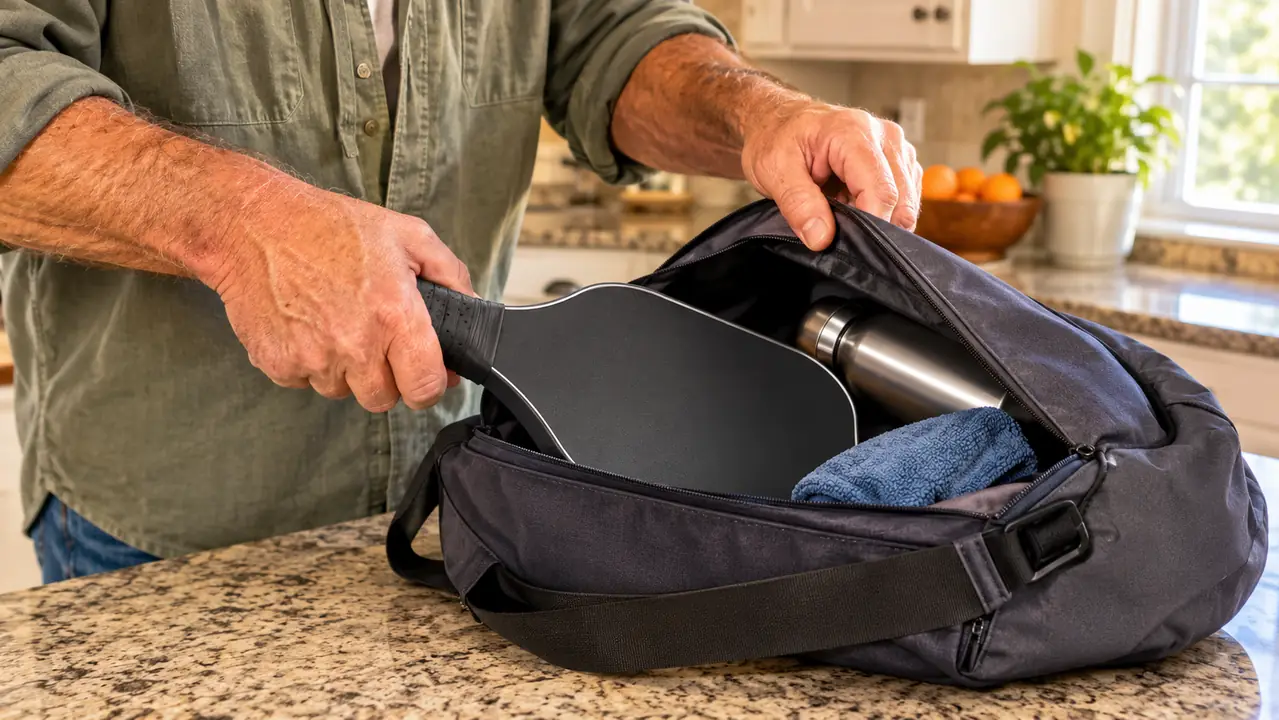
The paddle goes in before anything else, and it goes in grip up. This is the one packing rule I would argue about with anybody. If the paddle goes in last, it sits on top of everything and slides around, and the face is what takes the wear.
My Onix Graphite Z5 has a graphite face. Six months of a paddle bouncing against a water bottle in a bag is six months of small abrasions on the face, and I would rather not do that to a paddle I plan to keep using. Grip up means the handle is what I grab when I open the bag, which it turns out is the way I want to grab it anyway.
The listing on the Franklin Sports sling bag puts racket capacity at six paddles. I have never carried six. Most mornings it is my Z5 and, on Saturdays, Carol's paddle next to it, and the two sit flat against each other without much room to shift. If you carry two paddles, put them face to face so the surfaces are not rubbing on anything else.
One thing worth saying here: I wrap my Z5 with an overgrip, and the overgrip is what makes the handle a little thicker in the bag. It has not caused a problem, but if your grip is brand new and tacky, give it a minute to dry before it goes in against anything.
Step 3: Balls in a mesh bag, not loose
Loose balls in a bag are a small annoyance that compounds. They roll to the bottom, they get under the paddle, and when you open the bag at the courts they scatter. I keep my Tourna Strike outdoor balls in a mesh drawstring bag and drop the whole thing in.
How many depends on the morning. Open play at the town park means I might not need to supply balls at all, but I bring a dozen anyway because somebody always shows up short. If I am staying after to drill serves and drops on an empty court, I bring more and pull from the loose dozen I keep in the truck.
Outdoors I use the Tourna Strike balls, the yellow 40-hole ones. Indoor sessions at the community center in the winter use the gym's own indoor balls, so the mesh bag stays home and I just carry my paddle and shoes. That is worth knowing if you play both, because outdoor balls and indoor balls are not the same thing and the gym does not want yours.
Step 4: Water, towel, and the padded pocket
Water bottle in the side of the main compartment, not loose on top of the paddle. A full bottle is the heaviest thing in the bag and it will find the bottom. Mine goes in standing up and I check the cap is tight, because a slow leak into a bag with a paddle in it is a bad way to start a morning.
The towel goes in folded and on top, because I want it first when I reach in after a long point. Same for a small thing of hand sanitizer, if that is your habit. The bag has a stash pocket on the outside, and that is where the towel would go if I did not want it inside, but I have found the outside pocket is better for the things I need while standing at the fence.
The padded pocket on the Franklin Sports bag is where the phone and the truck keys go, and this is the part of the bag that sold me. Both in the same padded pocket, every time, no exceptions. Not the keys in my pocket and the phone in the bag. Both in the padded pocket. Six months of that habit and I have not locked my keys in the truck once, which for me is a record.
Step 5: Hang it, check it, put it in the truck
The bag has a built-in fence hook inside the largest pocket, and I use it at the outdoor courts every single session. It hangs off the fence at eye level, the paddle is right there, and nothing is on the ground getting wet. The hook is one of those small details I did not think about when I bought the bag and now would miss if it were gone.
But the hook does one more job for me. Once the bag is packed at night, I hang it on the hook on the inside of the garage door, where the light hits it. It is in my line of sight on the way to the truck. That is the whole check. If I see it hanging there, it is packed. If I do not, I forgot something.
Then it goes behind the seat of the truck. Not in the bed, where the pickup tube and the loose balls live, because the bed is not dry and the bag is polyester with a soft shell. Behind the seat, out of the sun, out of the weather, waiting for the morning. Fifteen ounces empty by the listing, so it is not a thing I notice carrying.
Both in the padded pocket, every time, no exceptions. Not the keys in my pocket and the phone in the bag. Six months of that habit and I have not locked my keys in the truck once.
What I do differently for Saturday doubles
Saturday is Carol and me, so the bag carries two paddles instead of one and I add a second water bottle. Her paddle goes in face to face with mine. Two paddles and two bottles is about the most I have ever had in the bag, and there is still room in the main compartment, which is why I have never felt the need for anything bigger.
The other Saturday change is the balls. Weekend open play at the park is busier and the courts turn over faster, so I bring the full dozen and leave the loose reserve in the truck rather than carrying it all to the fence.
What I put in the truck and not in the bag
Two things stay in the truck. The loose dozen outdoor balls live in a mesh bag in the cab, and the Tourna pickup tube lives in the bed. The tube holds about seventeen balls by the listing, which is more than I ever need for a morning, but it makes my afternoon drilling sessions a lot less bending over.
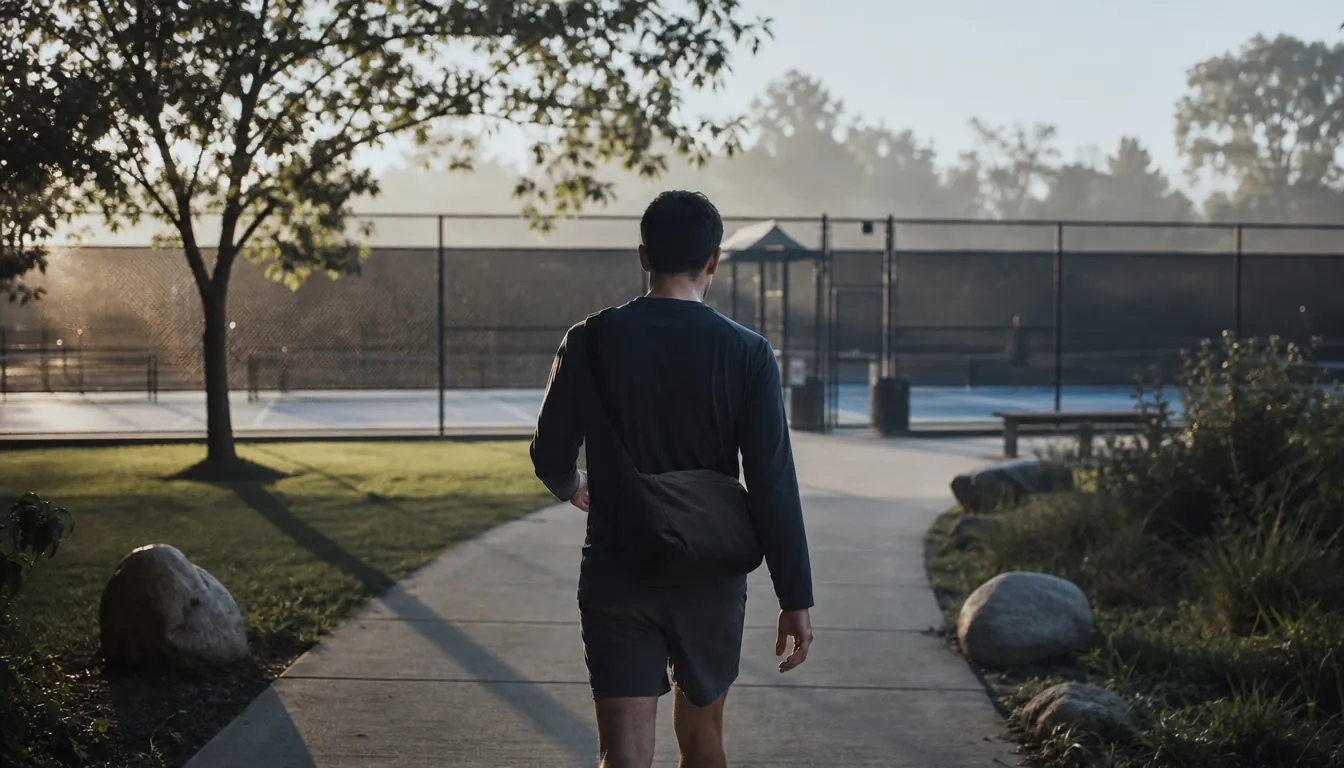
The reason they stay in the truck is weight and wetness. The tube is awkward and long and does not fit well in a bag designed to be slung over a shoulder. The spare balls are just backup and I do not want to carry a bag that is heavier than it needs to be on the walk from the parking lot to the courts.
What Else Helps
The single biggest thing is a bag with a fixed place for the small items. A bag without a padded pocket for the phone and keys turns into a bag where you are feeling around the bottom with your hand every morning, which is how a key ends up in the grass at the courts. The padded pocket on this bag is the reason I stopped losing things.
The second is a routine that runs in the same order every time. Mine is empty, paddle, balls, water and towel, padded pocket, hang it up. Same six moves at eight in the evening, and I could do them in the dark. If you change your order every night, you will eventually skip a step and not know it until you are parked.
The third is a small thing on the shoes. My ASICS Gel-Dedicate 9 court shoes never come out of the truck in the summer. They live on the floor of the passenger side, because they are court shoes and there is no reason to carry them into the house and back out again. If you wear yours inside, put them by the door with the bag so they are part of the same glance.
If you are shopping for a bag and want the full picture of how this one has held up, I wrote about that separately, and there is also a comparison against a fence-hook bag and a piece on why a sling bag beats a gym bag for this. Those are worth a read before you spend anything.
And one honest note about my own body, since it comes up. I had some tightness in my right elbow in my first season. I rested it, I loosened my grip, and I talked to my own doctor about it. I am not a coach or a physical therapist and I do not hand out advice on elbows. If something hurts, that is a conversation with your doctor, not with a guy on the internet who plays four mornings a week.
Pack it once tonight and stop turning around at the park entrance
The Franklin Sports sling bag is soft-sided with a polyester shell, an adjustable shoulder strap and a zipper closure, plus a built-in fence hook inside the largest pocket. Listed at 18.5 by 13 by 8 inches and 15.2 ounces, one size. Load it the night before and it is the last thing you have to think about.
Amazon See current details on Amazon →