
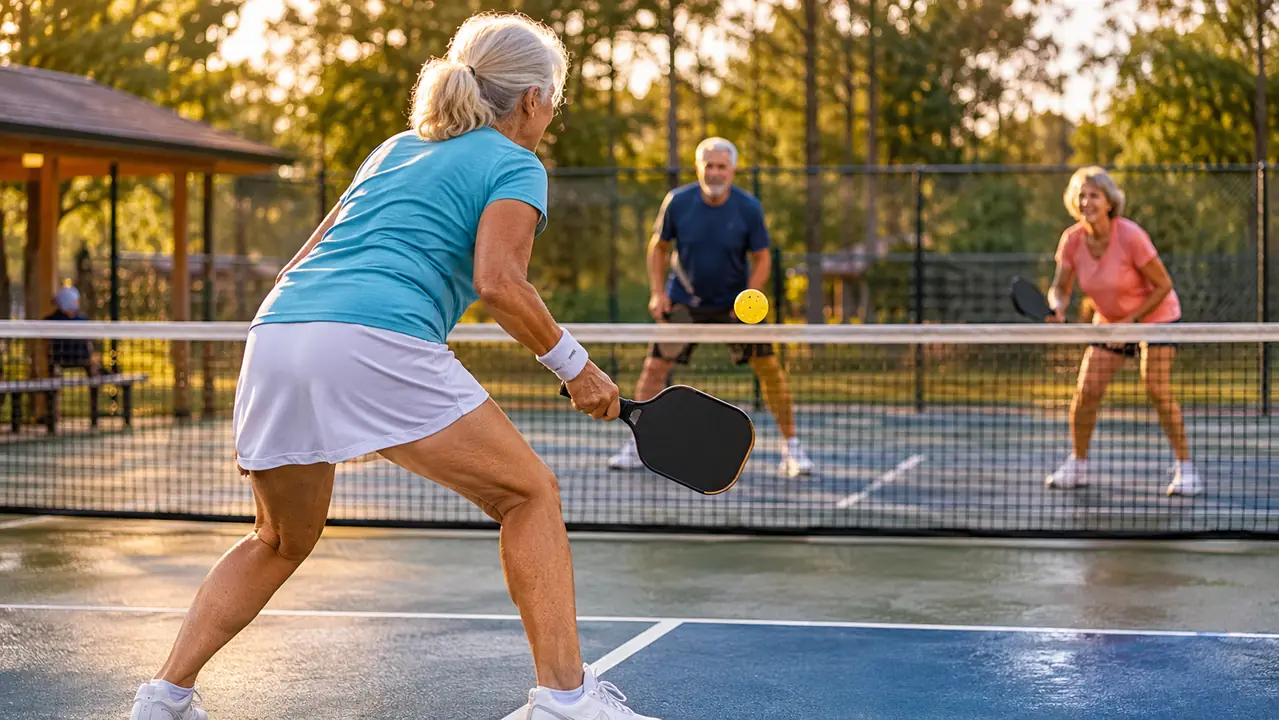
Two seasons of pickleball in running shoes is one season too many. I know because I did it. I bought a pair of walking shoes a few years back, liked how they felt on the sidewalk, and wore them straight onto the outdoor courts at the town park ten minutes from my house. On asphalt they felt like standing on a mattress that wanted to slide sideways, and I told myself it was fine.
What changed my mind was a Tuesday morning in March 2026. I turned to chase a ball down the middle and felt my right foot slide inside the shoe before the shoe itself moved. Nothing happened to me. But standing there, I thought about how much of this game is stopping, starting and changing direction in about the space of a kitchen table.
So I did what I do with any purchase. I read the spec sheets and compared listings for a week. I ended up in a pair of ASICS Gel-Dedicate 9 court shoes, men's, bought in March 2026, and I have played in them four or five weekday mornings since, 8:00 to about 10:30, plus Saturday doubles with my wife Carol. I am not a coach and not a shoe designer. What follows is the checklist I wish somebody had handed me two seasons earlier. The ASICS pair is simply what the checklist led me to.
The Pair My Checklist Landed On
ASICS Gel-Dedicate 9, men's. Rubber sole, foam insole cushioning, cushioning level listed as moderate, lace-up closure, closed toe. It is what I have played in since March 2026, on outdoor asphalt and on a gym floor in the winter.
Amazon Check Today's Price on Amazon →Step 1: Start With the Surface You Play On
The first question is not which shoe. It is which floor. I play on outdoor asphalt at the town park from April to early November, and on a smooth gym floor at the community center in the winter. Those are two different problems. Outdoor courts are gritty and they eat outsoles. Gym floors are slick and they punish a shoe with no grip left on it. A shoe that feels planted on one can feel vague on the other, and that is worth knowing before you decide anything.
The other surface detail is weather. Morning play in April in Rhode Island means dew on the court for the first half hour, and wet asphalt is the closest thing to ice you will find in this sport. The listing for the ASICS pair says plainly that the shoe is not water resistant. I like that the listing says so instead of dancing around it. It means I know where I stand. I wipe my soles on the mat by the gate and I am a little more careful for the first few games.
One more piece of practical math. The listing gives the product dimensions as 12.44 by 6.3 by 4.75 inches and the weight as 2.2 pounds. If you are used to a light running shoe, that weight is noticeable when you first pick one up. On the court I stopped thinking about it by the second morning. Pick it up in the store or read the number on the listing and decide for yourself whether it matters to you, because that part is personal and I cannot settle it for you.
Step 2: Get the Length and the Toe Right First
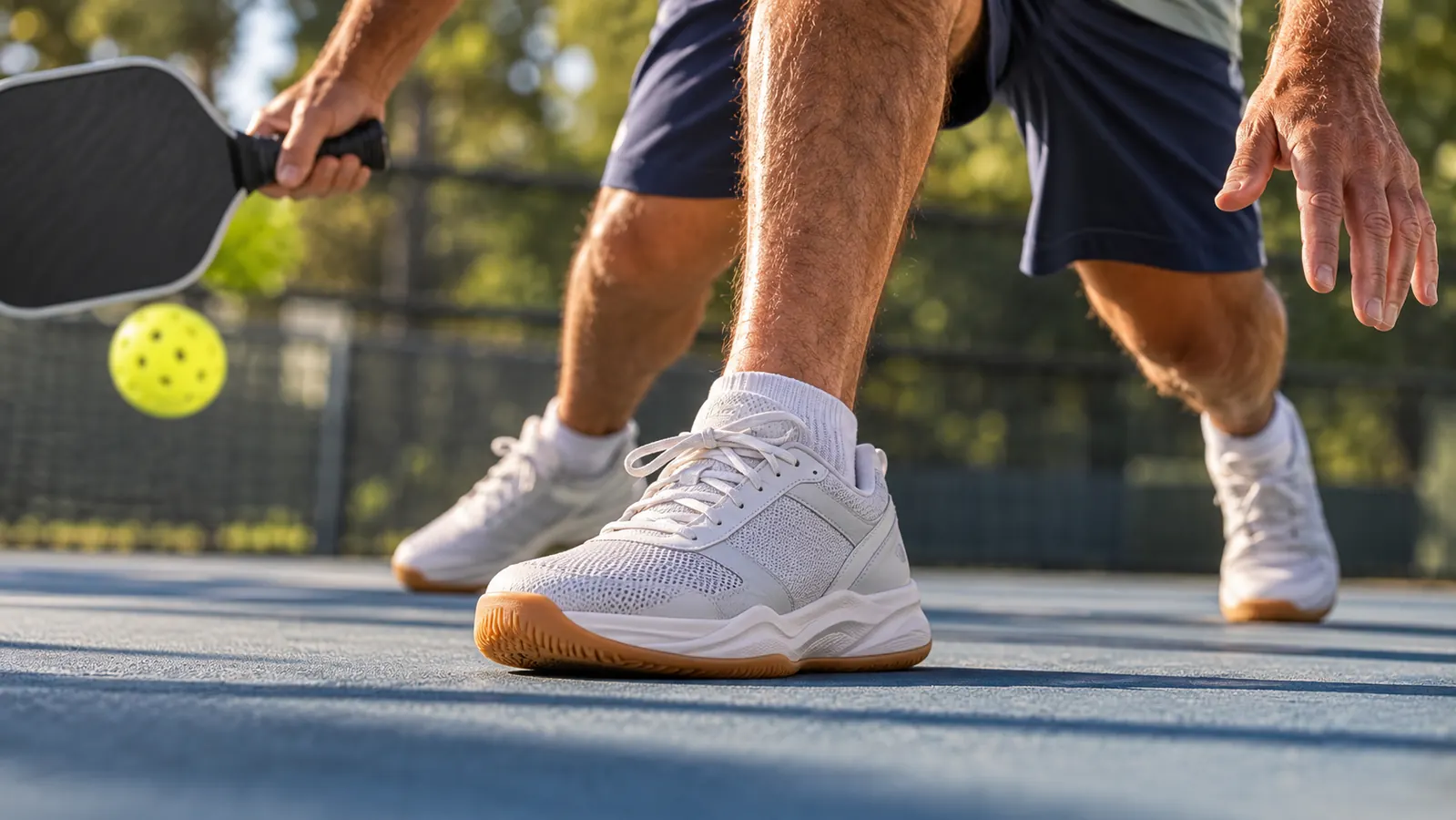
You can fix laces. You cannot fix a shoe that is the wrong length. The listing lists a closed toe and a lace-up closure, which sounds like nothing until you have played in a shoe with a soft upper that lets your foot slide forward on every stop. My rule is a thumb's width of room in front of the longest toe, measured standing up, at the end of the day, in the socks I actually play in. Feet swell. Mine do, and yours probably do too.
The heel is the other half of it. Put the shoe on, lace it, and try to walk the heel out of the back. If it lifts more than a little, the shoe is either too long or laced too loosely, and no amount of tightening at the top will fix a long shoe. I learned that the expensive way with work boots. On court it matters more, because a heel that lifts on a lateral step turns into a hot spot by the second game and a blister by the third.
Socks are part of the fit, not an afterthought. I wear a cushioned athletic sock, not a thin dress sock and not two pairs at once. Bring the socks to the try-on. If you have a bunion, a hammer toe, or any foot issue a doctor has named, get that looked at before you shop, because I am not a podiatrist and a shoe is not a treatment. I buy what fits the foot I have, not the foot I had at 40.
Step 3: Read the Sole and the Cushioning Line
Here is what the ASICS listing actually tells you, in plain language. Rubber sole. Foam insole cushioning. Cushioning level listed as moderate. Lace-up closure. Closed toe. Not water resistant. Athletic shoe. That is a short list, and it is more useful to me than a paragraph of adjectives.
Rubber matters because a court shoe needs a sole that grips a hard painted surface without grabbing it and holding on. Running shoe outsoles are built to handle pavement and gravel, with deeper tread and softer rubber, and on a smooth court that tread can feel like it wants to catch. I noticed the difference the first morning in the ASICS pair. My stops ended closer to where I meant them to end. That is my own impression of one shoe on one court, not a measurement of anything.
Moderate cushioning is the other line worth reading twice. Moderate is the middle of the range. Not a plush trainer, not a bare racing flat. For a 64 year old who plays two and a half hours at a time on asphalt, moderate is roughly the right neighborhood. Too soft and I feel like I am pushing off a sponge. Too firm and my feet are tired by the last game. Your neighborhood may differ, so treat the word as a starting point rather than a verdict.
Running shoes are built to go forward. Pickleball keeps asking you to go sideways.
Step 4: Match the Shoe to the Session You Play
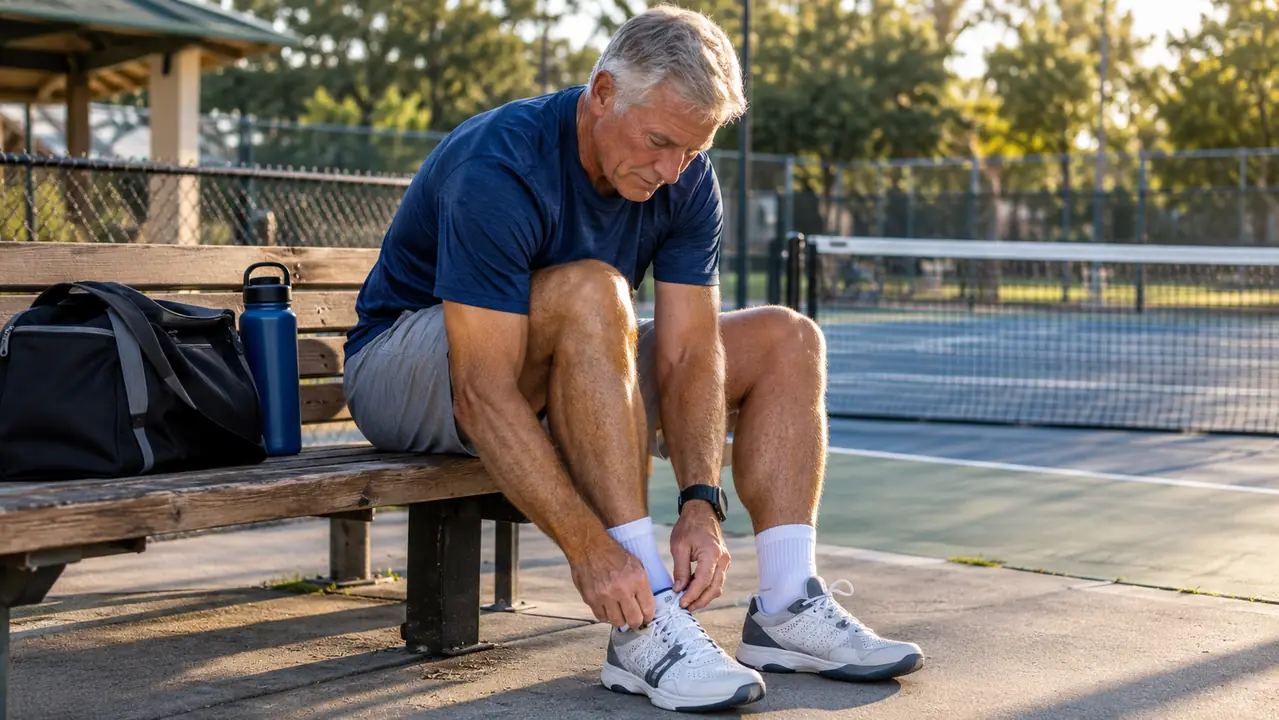
Be honest about the session, not the ideal. I play four or five mornings a week, about two and a half hours each, standing on asphalt the whole time. That is a real load on feet at any age, and it is a different load than a 45 minute recreation night. Write down your actual session before you shop. How long, how often, what surface, and whether you sit down between games.
It matters because cushioning and weight trade against each other. The ASICS pair is listed at 2.2 pounds with moderate foam underfoot. A lighter shoe may feel quicker for the first ten minutes and less kind by the second hour. A heavier, softer shoe may feel wonderful standing still and slow to turn in. Neither is wrong. They fit different sessions, and the only session that counts is the one you keep showing up for.
Age changes the arithmetic a little, and I will not pretend to know how much. It is just that recovery takes longer than it did at 40, so the shoe that leaves me less beaten up on Tuesday is worth more to me than the shoe that feels fastest. If you have a knee, a hip or a back that has been talking to you, talk to your doctor about what to play in. That is well above my pay grade and I mean it.
Step 5: Break Them In on the Court, Not at the Store
Wear new court shoes around the house for an evening, with the socks you play in, and check for pressure at the toe, the arch and the heel. Then play one short session. Not your normal two and a half hours. One game, or twenty minutes of drilling, then take them off and look at your feet. That is how you find a hot spot while it is still a hot spot and not a blister.
I do not wear my court shoes anywhere but the court. Not to the store, not to the mailbox, not out to the truck. Two reasons. The outsole stays clean, which matters on a smooth indoor floor where grit under a rubber sole is a slip waiting to happen. And the foam stays foam instead of getting flattened on concrete before it ever sees a game. It also means the shoes last longer, which is a practical concern and not a sales pitch.
Once they are broken in, watch them. Look at the sole every few weeks. Court shoes wear where you push off, and a shoe that has gone smooth on one corner is no longer doing the job you bought it for, no matter how good the upper still looks. I check mine on Sunday evenings while I am emptying the ball bag. It takes ten seconds and it has told me more than any review ever did.
What Else Helps
A few things outside the shoe made my mornings easier. A good sock is the cheapest change you can make, and a fresh one beats a stretched out one. Keep a towel in the bag for your soles on a dewy morning. Carry a spare pair of socks in the summer, because wet feet and a two hour session are a bad combination. If you wear orthotics, bring them when you try shoes on, and swap the factory insole only if a professional tells you to, not because a stranger on the internet did.
And a word about how you stand. A lot of the older players I see at open play stand flat footed and square to the net between shots, then take one big step to chase a ball. Smaller steps, a little bend in the knees, and a split step before your opponent hits will do more for how stable you feel than any single piece of equipment. I am not a coach and I do not teach anybody. I just notice that on the mornings I move my feet early, my shoes have a lot less work to do.
Read the Listing the Way You Read a Work Order
Rubber sole, foam insole, moderate cushioning, lace-up, closed toe, not water resistant, listed at 2.2 pounds. If that list matches the sessions you actually play, this is a sensible place to start.
Amazon See the ASICS Gel-Dedicate 9 on Amazon →